
As electricity prices continue to rise across New South Wales and the ACT, many homeowners who invested in solar several years ago are asking an important question:
“Should I add a battery to my existing solar system?”
For a growing number of households, the answer is yes.
Solar panels remain one of the most effective ways to reduce electricity costs and lower carbon emissions. However, many solar owners are still exporting a large portion of the energy they generate during the day while purchasing electricity from the grid during the evening when solar production stops.
Battery storage changes this equation.
Instead of sending excess solar energy back to the grid, a battery allows homeowners to store that energy and use it later when demand is highest. Combined with the growing availability of the Cheaper Home Batteries Program, the Battery rebate NSW, the NSW solar battery rebate, the Battery program NSW, and various forms of Battery incentivesupport, battery storage is becoming more accessible than ever.
At Polygon Energy, we believe every homeowner should understand the opportunities available before making a decision. This guide explains why battery storage is becoming one of the most valuable upgrades for existing solar systems.
When many solar systems were originally installed, feed-in tariffs were considerably higher than they are today.
Homeowners could export excess electricity and receive a meaningful financial return. Today, that landscape has changed significantly.
In many cases, the electricity you purchase from the grid costs substantially more than the amount you receive for exporting solar energy.
This means the greatest value often comes from using your own solar power rather than selling it.
Battery storage helps achieve exactly that.
By storing excess daytime generation, batteries allow households to increase self-consumption and reduce reliance on expensive grid electricity during the evening.
This is one of the key reasons interest in the Cheaper Home Batteries Program continues to grow across NSW. Many homeowners are now exploring how the Battery rebate NSW and the NSW solar battery rebate can help improve the return on their existing solar investment.
One of the most attractive benefits of battery storage is increased energy independence.
A battery allows your home to capture surplus solar energy during the day and use it after sunset. This reduces the amount of electricity imported from the grid and gives homeowners greater control over their energy consumption.
As electricity prices continue to fluctuate, many households are looking at battery storage as a way to gain more certainty over future energy costs.
Programs such as the Battery program NSW and available Battery incentive opportunities are making this transition easier for many homeowners.
Your solar panels are already producing valuable clean energy.
Without a battery, a large portion of that energy may be exported back to the grid for relatively low returns.
By adding battery storage, homeowners can use more of the electricity generated on their own roof. This increases solar self-consumption and can improve the overall value of an existing solar system.
Many households exploring the Cheaper Home Batteries Program are doing so specifically because they want to maximise the value of their solar generation rather than increasing exports.
Electricity costs have become a major concern for households across Australia.
Battery storage provides an opportunity to reduce exposure to future energy price increases by relying more heavily on stored solar energy.
This benefit becomes even more compelling when combined with the Battery rebate NSW and the NSW solar battery rebate, which can help reduce the upfront investment required.
Depending on the battery system and installation design, many battery solutions can provide backup power during grid outages.
For homeowners who value energy security, this can help keep essential appliances operating when the grid becomes unavailable.
As extreme weather events and network disruptions become more common, battery storage is increasingly viewed as a resilience solution rather than simply a financial investment.
Modern homes are consuming more electricity than ever before.
Electric vehicles, heat pumps, induction cooking systems, home offices, and smart technologies are all increasing household energy demand.
Battery storage helps create a future-ready energy system capable of supporting these evolving requirements.
This is one reason why the Battery program NSW has attracted significant attention from homeowners planning for long-term energy independence.
At Polygon Energy, we believe every battery recommendation should be backed by careful design and real-world performance outcomes.
One recent project perfectly demonstrates how battery storage can transform an already high-performing solar installation into a complete energy ecosystem.
The project combined:
The homeowner wanted more than just lower electricity bills.
The objective was to maximise solar self-consumption, support electric vehicle charging, reduce grid reliance, and create a smarter energy management system capable of adapting to future household needs.
The result was a highly integrated solution that stores excess daytime solar generation and makes it available when energy demand increases later in the day.
The project achieved approximately $3,700 in annual savings and delivered an estimated payback period of around 3.3 years.
Most importantly, it demonstrates a key point often overlooked by homeowners:
Battery storage is not simply about adding a battery.
It is about creating a complete energy ecosystem where solar generation, energy storage, electric vehicle charging, and intelligent energy management work together seamlessly.
As interest in the Cheaper Home Batteries Program continues to grow, projects like this highlight the value of proper system design rather than simply choosing the cheapest battery available.
Here’s a revised section you can directly insert into the article under a new heading called “A Real-World Example: Turning Solar Into a Smarter Energy Ecosystem”.
One of the most common misconceptions around battery storage is that it only benefits homes looking for backup power. In reality, a well-designed battery system can completely transform how solar energy is generated, stored, and used throughout a property.
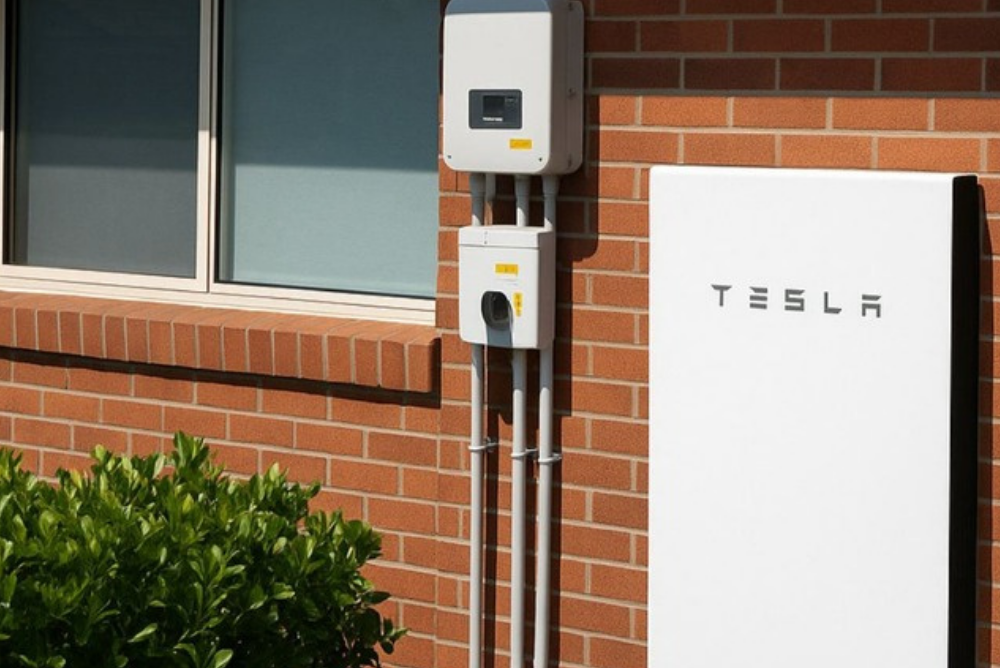
A recent project delivered by Polygon Energy demonstrates exactly what this looks like in practice. The system combined a 15.54 kW solar PV installation, a 15 kW SMA inverter, Tesla Powerwall+ battery storage, smart energy monitoring, and integrated EV charging into one seamless energy solution.
The homeowner wanted more than just solar savings. The objective was to maximise self-consumption, support electric vehicle charging, and reduce long-term reliance on the grid — all within the limitations of the available installation space.
The final solution included:
The outcome was a highly integrated energy ecosystem capable of storing excess daytime solar generation and using it when household demand increased later in the day. The project achieved approximately $3,700 in annual energy savings and delivered an estimated payback period of around 3.3 years.
This project highlights an important point for homeowners who already have solar installed: adding a battery is often not simply about storing electricity. It is about creating a smarter, more connected energy system that supports future technologies such as EV charging while maximising the value of every kilowatt-hour generated on the roof.
Explore how Polygon Energy delivered a 15 kW SMA solar system with smart battery storage and fast EV charging to create a future-ready energy solution for a Canberra homeowner.
Many homeowners assume their current solar system cannot accommodate battery storage.
In reality, many existing systems can be upgraded.
However, every property is different.
Factors that influence battery compatibility include:
This is where professional advice becomes critical.
While government support such as the Battery rebate NSW and the NSW solar battery rebate can improve affordability, selecting the right battery system requires a detailed understanding of how the property consumes energy.
Recent battery programs have generated significant excitement among homeowners.
However, choosing a battery based solely on rebate eligibility can sometimes lead to disappointing outcomes.
A successful battery installation should be designed around:
At Polygon Energy, our approach focuses on system performance rather than simply equipment selection.
Whether a homeowner is exploring the Battery program NSW, comparing Battery incentive opportunities, or evaluating the benefits of the Cheaper Home Batteries Program, the goal should always be the same: delivering the right solution for the property.
Battery storage can provide value for many households, but some benefit more than others.
Battery systems are often ideal for homeowners who:
Many of these households are now actively investigating the Battery rebate NSW, the NSW solar battery rebate, and the Battery program NSW to determine whether battery storage aligns with their goals.
Battery economics continue to improve.
Falling battery costs, increasing electricity prices, and government support mechanisms are all contributing to stronger financial outcomes.
Programs such as the Cheaper Home Batteries Program are helping accelerate battery adoption by improving affordability for eligible households.
At the same time, additional Battery incentive opportunities may further enhance the value proposition depending on system design and eligibility requirements.
However, it is important to remember that financial returns should not be viewed in isolation.
For many homeowners, benefits such as energy security, resilience, EV charging support, and reduced reliance on the grid are equally important considerations.
One of the most common misconceptions around battery storage is that it only benefits homes looking for backup power. In reality, a well-designed battery system can completely transform how solar energy is generated, stored, and used throughout a property.
A recent project delivered by Polygon Energy demonstrates exactly what this looks like in practice. The system combined a 15.54 kW solar PV installation, a 15 kW SMA inverter, Tesla Powerwall+ battery storage, smart energy monitoring, and integrated EV charging into one seamless energy solution.
The homeowner wanted more than just solar savings. The objective was to maximise self-consumption, support electric vehicle charging, and reduce long-term reliance on the grid — all within the limitations of the available installation space.
The final solution included:
The outcome was a highly integrated energy ecosystem capable of storing excess daytime solar generation and using it when household demand increased later in the day. The project achieved approximately $3,700 in annual energy savings and delivered an estimated payback period of around 3.3 years.
This project highlights an important point for homeowners who already have solar installed: adding a battery is often not simply about storing electricity. It is about creating a smarter, more connected energy system that supports future technologies such as EV charging while maximising the value of every kilowatt-hour generated on the roof.
Many solar systems installed several years ago were designed before home batteries and EV charging became mainstream considerations.
Today, energy consumption patterns are changing rapidly. Electric vehicles, smart appliances, home automation systems, and rising electricity prices are increasing the value of energy storage.
Adding a battery can help bridge the gap between when solar energy is generated and when it is actually needed, allowing homeowners to unlock more value from the solar system they already own.
At Polygon Energy, every battery recommendation starts with understanding how a household consumes energy today — while also preparing for how it may consume energy in the future. Whether the goal is reducing grid reliance, improving energy resilience, supporting EV charging, or increasing solar self-consumption, battery storage should be designed as part of a complete energy strategy rather than treated as a standalone product.
Australia’s energy landscape is changing rapidly.
Solar panels transformed how households generate electricity.
Battery storage is transforming how that electricity is used.
As technologies continue to evolve, battery systems will play an increasingly important role in helping homeowners optimise energy usage, reduce grid dependence, and support emerging technologies such as electric vehicles.
The growing popularity of the Cheaper Home Batteries Program, the Battery rebate NSW, the NSW solar battery rebate, the Battery program NSW, and various Battery incentive initiatives reflects a broader shift toward smarter and more self-sufficient homes.
Battery storage is not a one-size-fits-all solution.
The most successful projects begin with understanding how a household consumes energy today while planning for how it may consume energy in the future.
At Polygon Energy, we assess your existing solar system, analyse your energy usage patterns, and recommend solutions designed specifically for your property.
Whether you are considering battery storage for lower bills, greater energy independence, EV charging integration, or backup power capability, our team can help you make an informed decision.
If you already have solar installed, now may be the perfect time to explore battery storage.
Speak with Polygon Energy today to learn how the Cheaper Home Batteries Program, the Battery rebate NSW, the NSW solar battery rebate, the Battery program NSW, and available Battery incentive opportunities could help you unlock more value from the energy you already generate.