
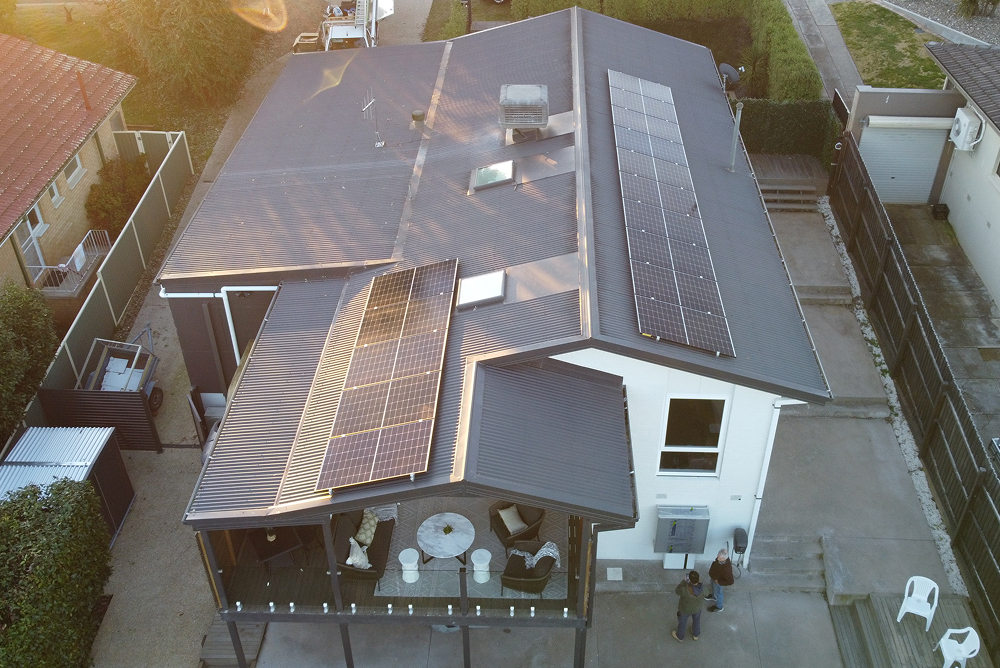
For homeowners across NSW, ACT and Queensland, solar is no longer simply about putting panels on the roof and reducing daytime electricity bills. Increasingly, households are looking at solar generation, battery storage, energy monitoring and home electrification as parts of one connected energy solution.
The growth of battery storage is accelerating this shift. The Australian Government’s Cheaper Home Batteries Program provides around a 30% upfront discount for eligible small-scale battery systems, with the program available nationally, including NSW, ACT and Queensland. (DCCEEW)
But incentives are only one part of the decision.
The more important question for homeowners is: What solar and battery system actually makes sense for my home?
A solar system that works well for a home in Sydney may not necessarily be the right solution for a property in Canberra or Brisbane.
Roof orientation, available roof space, shading, household consumption, climate, electricity tariffs and future energy requirements can all influence system design.
Queensland homes, for example, can have strong solar generation potential but may also have substantial cooling loads during warmer months. Canberra households can experience significant seasonal changes in heating and electricity consumption. NSW homes can range from dense metropolitan properties to large regional and rural properties with very different energy requirements.
This is why solar system design should begin with the property and the household — not with a particular panel or battery size.
Solar panel technology has continued to improve, with manufacturers offering increasingly efficient panels that can generate more electricity from available roof space.
For homeowners comparing a Top solar panel in NSW, however, simply choosing the highest-wattage panel isn’t enough.
The same principle applies to homeowners searching for solar solutions in the ACT or Queensland.
A high-efficiency panel can be particularly useful where roof space is limited. However, the most expensive panel isn’t automatically the best choice.
The objective should be to select equipment that works as part of the overall system.
Batteries are becoming central to the solar conversation
One of the biggest developments in Australia’s residential solar market is the growing adoption of battery storage.
Solar panels generate electricity during daylight hours, while many households consume a significant amount of electricity in the evening.
A battery can store surplus solar generation and make that energy available later, helping households increase their use of their own solar energy. (Energy.gov.au)
This is one of the reasons the Cheaper Home Batteries Program has become such an important development for Australian households.
Under the current federal program, eligible battery systems between 5 kWh and 100 kWh nominal capacity can receive support, with STCs applying to the first 50 kWh of usable capacity. Batteries must meet the relevant eligibility requirements, including approved products and installation by accredited installers. (DCCEEW)
The program applies across NSW, ACT and Queensland, making battery storage a much more accessible consideration for homeowners across these markets. (Energy.gov.au)
While incentives can make batteries more attractive, homeowners shouldn’t choose a battery simply because a rebate or discount is available.
Battery sizing should be based on:
The Australian Government specifically advises homeowners that bigger is not always better and recommends appropriately sizing the battery according to household usage, solar generation and inverter output. (DCCEEW)
This makes professional system design particularly important.
NSW: Solar, batteries and Virtual Power Plants
NSW homeowners have additional opportunities to make use of battery storage.
The NSW Government’s current Virtual Power Plant incentive allows eligible battery owners to connect their systems to a VPP and receive incentives for making stored electricity available to the grid. From 1 July 2026, batteries up to 50 kWh can be eligible for the NSW VPP incentive, subject to the program requirements. (NSW Climate and Energy Action)
NSW also introduced the Home Energy Saver Program in 2026, providing eligible households with access to zero-interest loans of up to $15,000 for energy upgrades including rooftop solar and household batteries. Eligible households may also qualify for targeted discounts. (NSW Government)
For NSW homeowners researching a Battery rebate NSW, it is therefore important to distinguish between the federal battery discount and NSW-specific incentives such as the VPP program.
ACT: Designing solar around Canberra homes
Canberra homeowners have their own set of considerations when evaluating solar and battery systems.
Seasonal energy consumption can be particularly important, with heating requirements influencing electricity use during colder months. A household considering electrification may therefore need to think beyond its current electricity consumption.
If you are looking for a solar expert NSW, the same principle applies when selecting a solar professional in the ACT: the installer should understand your home’s consumption, roof characteristics and future energy requirements before recommending equipment.
A properly designed system can also provide a foundation for future upgrades such as battery storage, EV charging and other electrification technologies.
Queensland: Solar generation and household consumption
Queensland’s strong solar resource makes rooftop solar an important option for many homeowners.
However, generation alone isn’t the whole story.
Air conditioning and other electrical loads can have a significant impact on household consumption. This makes it important to understand not just how much electricity a home generates, but when that electricity is being used.
For some households, solar generation during the day may align well with daytime cooling and appliance loads. For others, a battery can help shift surplus solar energy into the evening.
The right answer depends on the individual property.
Solar and batteries should work as one system
One of the biggest mistakes homeowners can make is treating panels, inverters and batteries as separate purchases.
A well-designed system considers:
Solar generation → household consumption → battery storage → grid export
The aim is to maximise the useful value of the electricity being generated.
This is why a Solar battery NSW, ACT or Queensland system should be designed around actual energy consumption rather than simply selecting a popular battery size.
Grid-connected homes aren’t the only properties that can benefit from solar.
Regional and remote properties across NSW and Queensland may have very different energy requirements, particularly where connecting to the electricity grid is difficult or expensive.
An off grid solar solution can combine solar generation, battery storage, backup generation and energy management to provide an independent electricity supply.
For properties considering an off grid solar system NSW, system design becomes even more important because there is no conventional grid supply to rely on when solar generation is low.
A Standalone off grid solar system must be designed around the property’s daily consumption, seasonal conditions, battery requirements and critical loads.
Home electrification is changing system requirements
Solar and batteries are also becoming part of a broader move towards home electrification.
Households are increasingly considering:
These technologies can significantly change electricity consumption.
A household that currently uses 15 kWh of electricity per day may have very different requirements after adding an EV and switching other appliances from gas to electricity.
That is why today’s solar design should consider tomorrow’s energy requirements.
What makes a quality solar system?
A quality solar systems NSW homeowner can rely on is about more than the equipment brand.
The same applies across the ACT and Queensland.
Homeowners should evaluate:
Is the system designed around the roof, shading, orientation and electricity consumption?
Are the proposed panels, inverter and battery suitable for the property and compatible with one another?
Is the installer appropriately accredited and experienced?
Will you be able to see how much energy your system is generating, storing and consuming?
Who will help if something goes wrong after installation?
The federal battery program recommends choosing reputable retailers and installers, using approved battery products and ensuring the installation is carried out by appropriately accredited professionals. (DCCEEW)
Before choosing a solar or battery system, homeowners across NSW, ACT and Queensland should ask:
The future of solar is about smarter energy management
The Australian solar market is moving beyond the traditional solar-panel model.
Across NSW, ACT and Queensland, homeowners are increasingly thinking about how to generate, store and manage electricity as one connected system.
Solar panels can generate clean electricity. Batteries can store surplus generation. Smart monitoring can provide greater visibility over consumption. Electrification can reduce reliance on fossil-fuel-based appliances.
Together, these technologies can create a more flexible household energy system.
At Polygon Energy, we believe the right solution starts with understanding the home — not selling a predetermined system size.
Whether you’re considering solar panels, Home battery installation, an off grid solar solution or a complete solar and battery system, the focus should be on designing an energy solution that works for your property today and can adapt to your requirements tomorrow.
Because the best solar system isn’t simply the one with the most panels or the biggest battery.
It’s the one designed around how your home actually generates, stores and uses energy.