
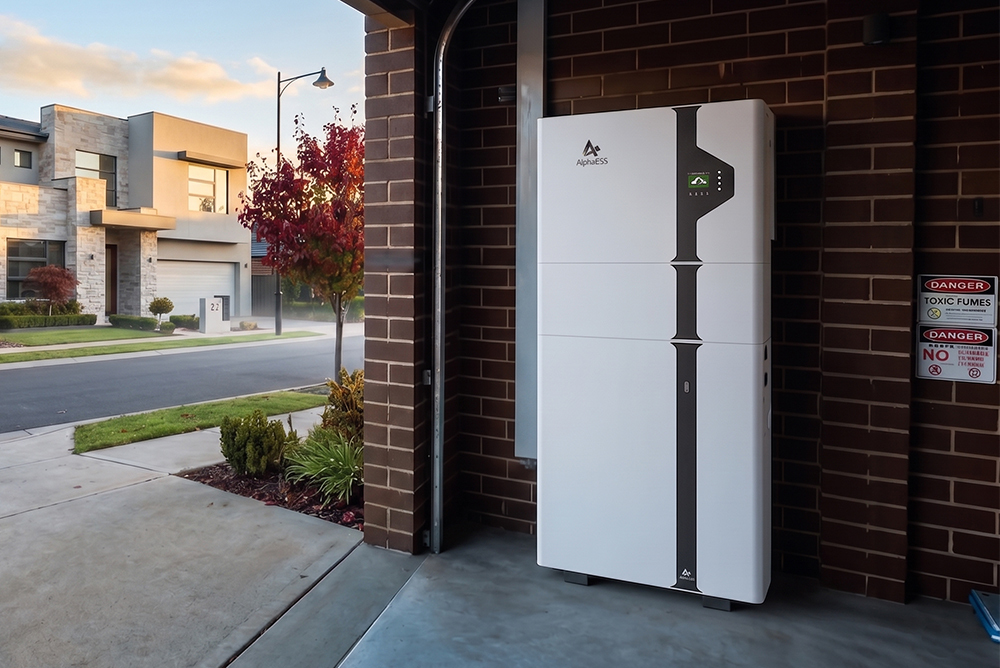
For NSW homeowners, the decision to install a home battery is becoming less about simply storing excess solar and more about taking control of when and how energy is used.
The Australian Government’s Cheaper Home Batteries Program has made eligible battery systems more affordable by providing around a 30% discount on eligible small-scale battery installations. The program applies to batteries connected to new or existing rooftop solar and is delivered through the Small-scale Renewable Energy Scheme (SRES).
At Polygon Energy, we believe the important question is not simply, “How much rebate can I get?”
It is:
That distinction matters. A rebate can reduce the upfront cost, but choosing the wrong battery size, technology or installation approach can affect your long-term savings.
The Cheaper Home Batteries Program is an Australian Government initiative supporting households and businesses that install eligible small-scale battery systems.
Since 1 July 2025, the program has provided around a 30% discount on eligible battery installations. The discount is generally passed on to customers through participating solar and battery retailers and installers. (Energy.gov.au)
For NSW homeowners, this means installing a battery can be significantly more accessible than it was before the program began.
The battery can be connected to:
The broader objective is simple: store more of the solar energy generated during the day and use it when your household actually needs electricity.
This is where homeowners can easily become confused.
NSW previously offered its own battery installation discount. However, that NSW battery installation discount is no longer available because the Australian Government’s Cheaper Home Batteries Program replaced it from 1 July 2025. (NSW Climate and Energy Action)
That does not mean NSW homeowners have no additional incentives available.
The NSW Government currently offers a separate Virtual Power Plant (VPP) incentive, which can be combined with the Australian Government’s Cheaper Home Batteries Program. From 1 July 2026, batteries up to 50 kWh are eligible for the NSW VPP incentive, subject to the program’s eligibility requirements. (NSW Climate and Energy Action)
So, when looking at the NSW solar battery rebate landscape, homeowners should consider both the federal battery discount and any applicable NSW incentives rather than assuming there is one single rebate.
The program is delivered through the SRES.
In practical terms, eligible battery systems can receive financial support that reduces the amount a homeowner needs to pay for the installation.
The discount is generally handled by the participating retailer or installer rather than requiring homeowners to manage the certificate process themselves. (Energy.gov.au)
However, the amount of support available can vary depending on factors such as battery capacity, the applicable scheme settings and when the system is installed.
This is why homeowners should avoid relying on an old rebate calculator or an article published several years ago.
A battery isn’t automatically the right choice for every household.
At Polygon Energy, we recommend looking at your energy consumption, existing solar system, electricity tariff, household usage patterns and future energy requirements before deciding on a battery.
A battery can be particularly useful if you:
Solar panels often generate their most energy during daylight hours, when many households are at work or school.
Without a battery, some of that unused generation may be exported to the grid.
A battery allows you to store some of that energy and use it later.
If your household’s electricity consumption increases after the sun goes down, storing solar energy during the day can help shift your energy usage away from grid electricity.
A battery can reduce your reliance on electricity from the grid by allowing you to use stored solar energy when your panels aren’t generating.
Electric vehicles, heat pumps, induction cooking and other electrification technologies can change how much electricity a household uses.
Planning your battery alongside your broader home electrification in NSW strategy can therefore be more effective than treating the battery as a standalone purchase.
This is one of the most important decisions homeowners make.
Bigger isn’t always better.
A battery should be sized around how much electricity your household actually uses, when you use it and how much excess solar your system produces.
For example, a household that consumes relatively little electricity overnight may not benefit financially from installing the largest battery available.
On the other hand, a household with high evening consumption, an electric vehicle or significant electrical loads may require substantially more storage.
At Polygon Energy, we look at the complete energy profile rather than recommending a battery size based simply on the number of solar panels installed.
Consider these factors:
How much energy does your household use on an average day?
How much electricity do you need after your solar system stops generating?
A battery needs sufficient solar generation behind it to charge effectively.
Are you planning an EV, heat pump, pool, induction cooking or other high-energy appliances?
Your tariff structure can influence the potential value of storing and using energy at different times.
You don’t necessarily need to replace your existing solar system to add a battery.
The Australian Government’s program supports eligible batteries connected to new or existing rooftop solar systems. (Energy.gov.au)
For homeowners with existing solar, the right approach depends on the age and configuration of the current system.
Polygon Energy can assess factors such as:
This is particularly important with older solar systems, where compatibility and system design need to be considered before adding storage.
A Virtual Power Plant, or VPP, connects participating home batteries so that stored energy can be coordinated as part of a wider electricity network.
For NSW homeowners, the VPP option is particularly relevant because the NSW Government provides an incentive for eligible households that connect their battery to an approved VPP arrangement. The VPP incentive can be combined with the federal Cheaper Home Batteries Program. (NSW Climate and Energy Action)
However, homeowners should not choose a battery solely because it qualifies for an incentive.
The battery should still make sense for the home’s energy requirements.
The rebate is only one part of the equation.
A battery is a long-term energy asset, so the quality of the system design and installation matters.
Before choosing an installer, consider:
Check that the installer and system meet the relevant Australian requirements.
Not every battery works with every solar configuration in the same way.
A good installer should assess your actual electricity usage rather than simply selling you a standard battery size.
Energy monitoring can help you understand how your solar and battery system performs over time.
Look beyond the headline warranty period. Understand what the warranty covers and the conditions attached to it.
If your household energy consumption is likely to increase, consider whether the proposed system can accommodate future requirements.
The Cheaper Home Batteries Program is designed to make battery storage more affordable.
But homeowners shouldn’t interpret “cheaper” as “choose the lowest-priced system.”
The real objective should be better value over the life of the system.
A low-cost battery that isn’t correctly sized or integrated with your solar system may not deliver the energy savings you expect.
Instead, consider:
Upfront cost + rebate + system performance + battery capacity + warranty + installation quality + expected usage.
That gives you a much better picture of value.
At Polygon Energy, we don’t believe in a one-size-fits-all battery recommendation.
Our approach starts with understanding the property.
We look at your existing or proposed solar system, electricity consumption, household requirements and future energy plans before recommending a solution.
Depending on the application, this can include solutions using established battery and inverter technologies, smart monitoring and energy management.
The objective isn’t simply to install more storage.
It’s to design an energy system that works harder for your home.
The previous NSW battery installation discount is no longer available. The Australian Government’s Cheaper Home Batteries Program now provides the main upfront battery discount, while eligible NSW households may also be able to access the NSW VPP incentive. (NSW Climate and Energy Action)
Yes. The program supports eligible batteries connected to new or existing rooftop solar systems. (Energy.gov.au)
Yes, eligible NSW homeowners can combine the Australian Government’s Cheaper Home Batteries Program discount with the NSW VPP incentive. (NSW Climate and Energy Action)
There is no universal answer. The right battery size depends on your electricity consumption, solar generation, evening usage, tariff and future energy requirements.
It can be, particularly if you have significant excess solar generation during the day and higher electricity consumption in the evening. However, the economics should be assessed based on your individual energy profile.
Not necessarily. Oversizing a battery can increase your upfront investment without necessarily delivering proportional savings. Proper system sizing is more important than simply choosing the largest available capacity.
The Cheaper Home Batteries Program has changed the economics of battery storage for Australian households.
For NSW homeowners, it creates an opportunity to install energy storage at a lower upfront cost while potentially combining it with eligible state incentives such as the VPP incentive.
But the rebate should be the starting point—not the entire decision.
The biggest opportunity comes from combining the right solar system, battery, inverter, monitoring and energy strategy for your home.
If you’re considering a battery under the Cheaper Home Batteries Program, speak with the Polygon Energy team to understand your eligibility, available incentives and the battery solution that makes sense for your home.