
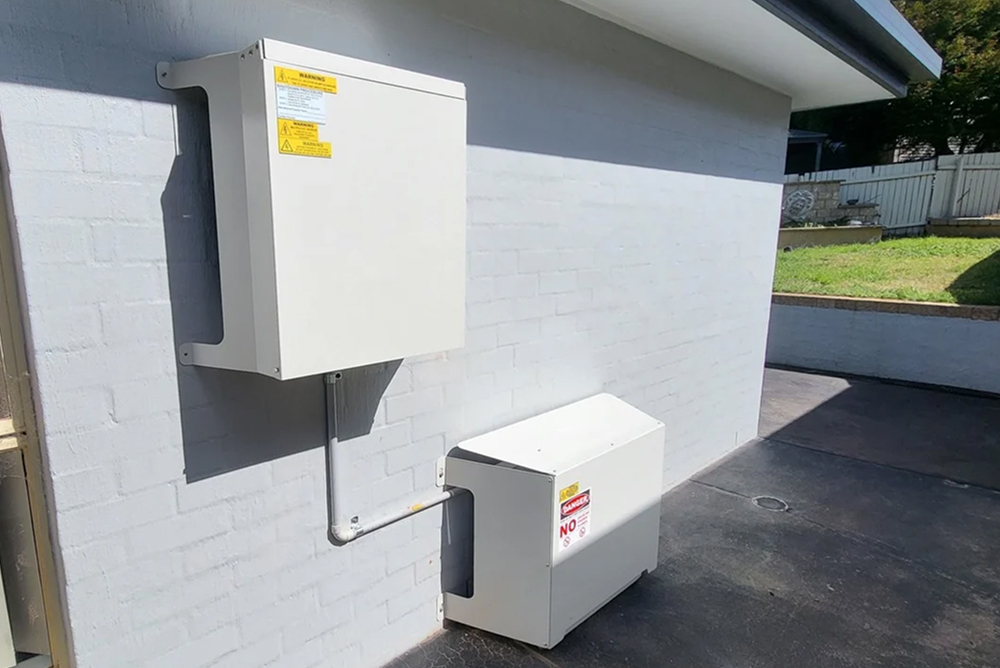
A battery system is an engineering decision before it’s a purchasing decision. Get the sizing wrong, mismatch the inverter, or skip a safety check, and the “biggest” battery on the market can still leave a household under-served — or worse, incorrectly installed. The right partner treats your home as a system to be engineered, not a product to be sold.
That’s why, for homeowners across NSW and the ACT, who the battery is installed by matters as much as which battery is installed.
Polygon Energy approaches storage the way an engineer approaches any design problem: understand the load, understand the constraints, then specify a solution that actually fits — from initial assessment through professional installation and ongoing support.
A battery is a long-term asset embedded in your home’s electrical system. A partner worth trusting looks past the sale and takes responsibility for the whole design.
That means being able to:
This is the standard Polygon Energy holds itself to.
01. The System Is Designed Around Your Home’s Data, Not a Default Spec
There is no single battery size that is correct for every household — anyone claiming otherwise is skipping the engineering.
The right system depends on measured electricity consumption, solar generation, the existing inverter and switchboard, household load patterns, and realistic plans for future electrification.
Polygon Energy works through these variables before recommending anything.
The outcome is a system sized to how your home actually draws and generates power — not the largest unit that happens to fit in the garage.
02. Technology Selection Is a Compatibility Exercise, Not a Brand Preference
A battery doesn’t operate in isolation. How it interacts with your solar panels, inverter, and monitoring system determines real-world performance far more than any single spec sheet figure.
Polygon Energy works with established, well-supported brands — including Sungrow, Enphase and GoodWe — and selects between them based on what suits the household, not what’s easiest to move.
For homeowners researching Solar battery NSW options, this distinction matters, because two properties with similar rooftops can have very different technical requirements underneath.
The objective isn’t to standardise on one product. It’s to match the right combination of components to each site.
03. Installation Quality Is a Safety Requirement, Not a Finishing Touch
Battery storage involves live electrical infrastructure. It should only ever be installed by appropriately qualified professionals working to code.
A correct installation accounts for more than physical placement — the electrical system, switchboard capacity, battery location, ventilation and thermal considerations, system configuration, and compliance with applicable Australian standards all need to be resolved before commissioning.
Polygon Energy pairs system design with hands-on professional installation, so the same team that specified the system is accountable for how it’s built.
04. Technical Concepts Are Explained Plainly, Not Obscured
Battery specifications are genuinely confusing, and that confusion shouldn’t be used to a seller’s advantage.
Usable capacity versus nominal capacity, cycle life, backup power, and energy management all affect what a system can actually deliver — and homeowners deserve a plain-language explanation, not marketing shorthand.
Polygon Energy explains, in practical terms, how much energy a system can store, when it charges, when it discharges, and how it works alongside solar generation.
This distinction becomes especially important when comparing a standard grid-connected battery against an off grid solar solution.
An off grid solar system NSW homeowners are considering typically needs a materially different design, since the battery and solar array have to supply reliable power without any grid backstop.
05. Rebates Are Explained in Full, Not Just the Headline Figure
Government incentives can make storage more accessible, but eligibility criteria and rebate calculations shift over time — and a partner acting in good faith walks you through the fine print, not just the top-line number.
Homeowners researching the SW solar battery rebate should understand how eligibility, battery capacity, installation requirements, and other conditions affect the actual benefit received, before treating that figure as fixed.
Similarly, a battery incentive should factor into the decision alongside overall system cost and technical suitability — not stand in as the sole justification for a purchase.
Polygon Energy walks homeowners through the incentives that genuinely apply to their proposed system.
06. The Design Accounts for Where Your Energy Use Is Headed
A battery installed today is often one step in a longer transition toward home electrification, and a system that ignores that trajectory is under-engineered from the outset.
Future load may reasonably include:
Planning for this upfront avoids installing a system that’s technically correct today and undersized within a few years.
07. Off-Grid Systems Are Engineered With Their Own Constraints
Not every property has the same requirements, and grid-connected assumptions don’t transfer directly to a site without one.
For rural properties and locations where grid connection is limited or unavailable, off grid solar offers an alternative way to generate and store power independently.
A Standalone off grid solar system typically combines solar panels, battery storage, an inverter, and energy management configured to operate without any grid support at all — which raises, rather than lowers, the design bar.
For an off grid solar system NSW installation, sizing precision matters even more: solar generation, battery capacity, household consumption, and backup requirements all have to be resolved together, with no grid to fall back on if the numbers are wrong.
Polygon Energy has direct experience designing for these more complex, higher-stakes energy requirements, including off-grid applications.
08. Local Technical Experience Reduces Risk
Selecting a battery installer isn’t a product decision — it’s a decision about who is technically accountable for your electrical system. Local knowledge and experience across different property types materially affects the quality of the outcome.
Polygon Energy has worked with 1,000+ Canberra households on renewable energy projects, spanning straightforward residential jobs and more complex installations.
For homeowners weighing Solar battery NSW options, an installer with that depth of experience is more likely to size, integrate, and install the system correctly the first time.
09. Price Per Kilowatt-Hour Is an Incomplete Comparison
It’s tempting to compare batteries on a single number: price per kilowatt-hour.
But the lowest-cost unit is rarely the best-engineered outcome for the property it’s going into.
A sound comparison weighs:
Battery + inverter + installation + system design + warranty + monitoring + support + long-term suitability.
The same logic applies to the SW solar battery rebate — it can lower the upfront cost, but the underlying system still has to be technically right for the property and its energy profile.
Government battery initiatives change, so eligibility should always be checked against current criteria before a purchase decision is made.
If you’re researching the Battery program NSW, treat the incentive as one input, not the deciding factor. Current electricity usage, solar generation, technical requirements, and future energy plans all belong in the same decision.
A properly qualified installer can walk you through how these factors interact — and whether battery storage is the right fit for your property at all.
Polygon Energy applies a whole-system engineering approach to battery installation.
Rather than starting with a battery and adapting your home to fit it, the process starts with your home’s actual requirements.
That means resolving:
Whether the project is a standard home battery, a Standalone off grid solar system, or a more technically complex property, the standard doesn’t change: design the right energy system for the site, not the sale.
If you’re weighing up battery storage, the question that matters isn’t:
“Which battery should I buy?”
It’s:
“Who is qualified to design the right energy system for my home?”
Polygon Energy brings engineering discipline to battery installation — pairing rigorous system design, trusted technology, and qualified installation to help homeowners make a decision they won’t need to revisit.
Because the biggest battery isn’t automatically the right one.
The correctly engineered system is.
Speak with Polygon Energy about designing a battery system around your home’s actual energy requirements.
Visit Polygon Energy to get started and find the right energy solution for your home.