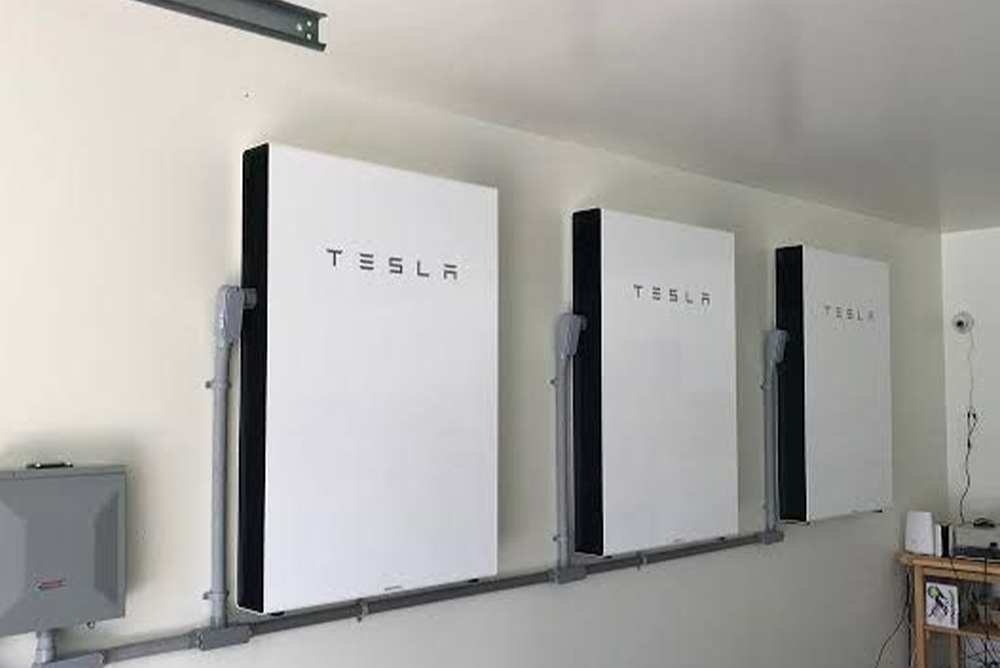
Battery storage has become a mainstream upgrade for New South Wales households. Tesla’s three-phase Powerwall 3P is now on the radar for Australian homes, and the federal Cheaper Home Batteries Program is about to become less generous. If you have been weighing up a solar battery NSW purchase, this guide covers what the new hardware offers, how the rebate works, why timing matters and how to choose the right installer.
What is the Tesla Powerwall 3P?
Many larger homes, farms and properties with heavy electrical loads run on three-phase power. Until now, battery choices for these properties have often been more complicated than for single-phase homes. The Powerwall 3P is designed to connect across all three phases.
The key specifications are:
- Usable storage: 13.5 kWh
- Power output: up to 15 kW under suitable conditions
- Solar inputs: four Maximum Power Point Trackers (MPPTs), allowing several solar strings to feed the unit
- Backup: when paired with Tesla’s Backup Gateway, three-phase loads can stay powered during a grid outage
- Expansion: compatible Powerwall 3 Expansion units add 13.5 kWh each
For households pursuing home electrification in NSW, this matters a great deal. Swapping gas appliances for induction cooking, adding heat pump hot water, running ducted reverse-cycle air conditioning and charging an EV all push up electricity demand. A three-phase battery can store daytime solar and release it in the evening, when those loads peak and grid power is most expensive.
The Tesla app also lets owners track solar generation, battery charging, household consumption and grid usage in one place, which makes it easier to see the system paying off.
How the federal rebate works
The discount most NSW households will see comes from the federal government. The federal scheme launched on 1 July 2025 as a $7.2 billion program to make home batteries more affordable. Instead of a cheque in the mail, the discount is created through Small-scale Technology Certificates (STCs). The more STCs your system generates, the larger the reduction in your upfront cost, and your installer usually applies it directly to your quote.
Since 1 May 2026 the scheme has used a tiered structure. The rebate is roughly $252 per kWh on the first 14 kWh, 60% of that on the next 14 kWh, and 15% beyond that. In practical terms, the first slice of storage attracts the strongest discount, so a right-sized system can offer better value than an oversized one. A single 13.5 kWh Powerwall 3P sits inside the top tier, which is the most generous part of the schedule.
This kind of battery incentive is one of the biggest ever offered to Australian households, and it is designed to taper. That tapering is why the next few weeks matter.
What NSW households really want to know
Plenty of homeowners search for a NSW solar battery rebate or a battery rebate NSW expecting a separate state payment on top of the federal discount. For most households, the main saving is the federal STC discount applied by the installer. State-level offers can change, so it is worth asking your installer whether any additional battery program NSWoptions apply to your address, tariff or home type when you request a quote.
We recommend treating any extra state support as a bonus rather than the foundation of your decision. Build your business case around the discount that is confirmed and the energy savings your household can realistically achieve.
The 1 January 2027 deadline
Here is the part that should prompt action. Support under the federal scheme is scheduled to fall every six months until it ends in 2030, and the next reduction is planned for 1 January 2027. On that date the STC factor steps down from 6.8 to 5.7 certificates per kWh. That is a meaningful cut in the dollar value of your rebate, and further reductions follow every six months after it.
A second detail catches many people out. The installation date used for the rebate is when the certificate of electrical compliance is issued, so the battery must be installed and certified before the cut-off. Signing a quote in December is not enough. The system needs to be fully installed, tested and certified.
There is also a funding risk. Some industry commentary suggests the scheme could reach full expenditure earlier than planned because uptake has been so strong. Whether or not that happens, waiting is a gamble. The Cheaper Home Batteries Program has a fixed schedule of reductions, and every six-month step-down makes the same battery more expensive to buy. Anyone who treats the battery incentive as permanent risks paying more than necessary.
Choosing the right installer
A battery is only as good as the way it is designed and installed. When you compare quotes, look beyond the headline price and ask about:
- Accredited installers and electricians with three-phase experience
- Equipment warranties, and who handles claims if something goes wrong
- Whether the quote is sized to your actual consumption data, not a generic estimate
- How the rebate is calculated and shown on the quote
- Realistic installation dates, particularly with the 1 January 2027 cut-off approaching
A reliable solar expert NSW will review your electricity bills, inspect your switchboard and roof, and explain the trade-offs honestly rather than pushing the biggest system. If your roof is already generating well, you may only need the right battery. If it isn’t, your first step might be improving generation.
The same thinking applies when you look for quality solar systems NSW households can rely on for 15 years or more. Weigh component quality, installation workmanship and after-sales support together, because a cheap quote with poor support can cost far more over the life of the system.
Planning a combined installation
If you don’t have solar yet, or your existing system is old, a joint solar and battery installation can be more efficient than doing the work in stages. A single visit can mean shared labour, one round of electrical compliance work and a system designed as a whole. Existing solar owners can retrofit a battery, and an experienced installer will check whether your inverter and wiring suit the upgrade.
Whichever route you take, a home battery installation involves more than mounting a unit on a wall. Your installer needs to consider location, ventilation, clearances, fire safety requirements, metering, network approvals and, for three-phase systems, how circuits are divided across phases. A well-run home battery installation also includes proper commissioning and a clear walkthrough of the app, so you know how your system behaves from day one.
Because the rebate depends on the compliance certificate date, a good solar and battery installation provider will give you a realistic timeline in writing and tell you early if the schedule is at risk.
Questions households ask us
Is the Powerwall 3P only for large homes?
No. It suits any property with three-phase supply, though it is most valuable where electricity use is high and solar generation is strong.
Will I get the rebate automatically?
The discount is normally applied by your installer as a reduction in your upfront cost, so you don’t need to chase it separately. Ask to see exactly how it appears on your quote.
Can I add more storage later?
Yes. Compatible expansion units add 13.5 kWh each, so you can start with what you need and grow as your household changes. Remember that rebate settings at the time of any future purchase may differ from today’s.
Is the Powerwall 3P eligible for the rebate?
Eligibility depends on the specific battery model meeting the program’s requirements, so we confirm this for every system we quote.
A simple checklist for NSW households
- Review your bills. Know how much power you use, and when.
- Check your phase supply. Three-phase homes should consider the Powerwall 3P alongside other options.
- Decide what you need to back up. Whole-home backup and essential-circuits backup differ greatly in cost.
- Think about the future. An EV, heat pump or pool upgrade changes your requirements, and planning for home electrification in NSW now avoids expensive rework later.
- Request several quotes. Compare solar battery NSW options on size, brand, warranty and rebate treatment.
- Ask about incentives. Check how each installer handles the battery rebate NSW households can claim, and whether any NSW solar battery rebate or battery program NSW offers apply on top of the federal discount.
- Choose a trusted partner. Look for a solar expert NSW who can show you quality solar systems NSW homeowners have installed and still rely on.
- Lock in your date. Confirm that installation and compliance certification can be completed before 31 December 2026.
The bottom line
The Powerwall 3P gives three-phase NSW homes a credible new battery option, with 13.5 kWh of storage, strong output and the ability to expand. The rebate environment is moving in the other direction. The discount is high now and is scheduled to shrink on 1 January 2027, and again every six months after that.
If you want to store your solar, power through outages and cut your bills, the best time to act is now.
Ready to find out if the Powerwall 3P or another battery suits your home? Contact Polygon Energy for a no-obligation assessment and secure your installation before the 1 January 2027 rebate reduction.