NSW Home Energy Saver, ESS and Energy Loans 2026: What They Cover and Who Qualifies

New South Wales runs several overlapping programs that cut the cost of home energy upgrades. Three names come up constantly: the Home Energy Saver (a zero-interest loan plus a targeted discount), the Energy Savings Scheme (ESS) (a certificate-based scheme that quietly lowers the price of many appliances and retrofits), and the loans that sit inside Home Energy Saver. They work differently, they are paid for differently, and they can often be combined. This guide explains each one in plain language.

The short version

Program What you get Who it suits How you access it
Home Energy Saver loan Zero-interest loan of up to $15,000, repayable over up to 10 years Homeowners and landlords with combined taxable household income up to $210,000 Apply through a participating lender (Brighte or Plenti)
Home Energy Saver discount Up to $4,000 off eligible upgrades, not repaid Homeowners and renters with household income up to $80,000, or an eligible concession card Through the discount provider, Creditex (listed as coming later in 2026)
Energy Savings Scheme (ESS) Price reductions built into eligible upgrades, funded by energy certificates Most households, depending on the product installed Automatic, through an accredited installer

NSW Home Energy Saver Program 2026: what it covers and who qualifies

What it is

The Home Energy Saver is a $557 million NSW Government program launched on 17 June 2026. It exists to remove the upfront cost barrier that stops many households from installing solar, batteries and efficient heating and cooling. Of the total, about $480 million is committed to loans and $77 million to targeted discounts. The government has said the program is expected to help more than 32,000 households.

There are two parts: a loan, which opened on launch day, and a discount, which was announced for later in 2026.


Part 1: the zero-interest loan

What you can borrow. Up to $15,000 at 0% interest, repayable over up to 10 years. If you are combining a loan with a discount on the same project, the loan needs to be at least $2,000.

Who qualifies. Homeowners and landlords with a combined annual taxable household income of up to $210,000, for a property in NSW. The lender still runs its own credit assessment, so being under the income cap does not guarantee approval.

Who delivers it. The loans are funded by the NSW Government and provided and managed by Brighte and Plenti. Installers working under the program need current New Energy Tech Consumer Code (NETCC) accreditation, so check that your installer is approved with the lender you choose.

When you start paying. Repayments begin after your installation is complete and working as intended, according to your loan agreement.


Part 2: the discount of up to $4,000

What you get. A discount of up to $4,000 off the cost of eligible upgrades. It is not a loan, so it is not repaid. You can only receive the maximum discount once, and you can spread it across more than one eligible upgrade.

Who qualifies. Homeowners and renters with a combined gross annual household income of up to $80,000, or an eligible concession card. The program page lists the Health Care Card, Low Income Health Care Card, Pensioner Concession Card and Veteran Gold Card. Renters need landlord approval and may also need strata approval.

What you still pay. Approved households make a minimum customer contribution of at least $200, or 10% of the total cost above $4,000, whichever is greater. Any cost beyond the discount and other incentives is also yours to cover.

How it works in practice. Discounts are delivered through Creditex. You cannot apply the discount to a quote you already hold. Creditex supplies a new quote as part of the application and combines the discount with other government incentives.

Availability. At the time of the most recent official page I could access, discount applications were listed as “coming soon”, with an email sign-up for notification. If you are close to the income limit or hold a concession card, check the official page for whether applications have opened before committing to a loan.


What upgrades are eligible

The same product list applies to both the loan and the discount. NSW Government material and program summaries list:

  • Rooftop solar
  • Home batteries
  • Reverse-cycle air conditioners
  • Heat pump hot water systems
  • Insulation
  • Switchboard upgrades
  • Ceiling fans
  • Draught-proofing
  • NatHERS home energy assessments

Installer guides also list home EV chargers among the eligible products. The program describes 13 eligible products in total, so read the current loan guidelines for the exact list and any product requirements, because lenders may not finance every product.


Discount first, then loan

If you qualify for both, the government recommends applying for the discount first. The order matters. If you take the loan first, you cannot apply a discount to that same purchase, although you can use a discount on a separate product. If you take the discount first and your project costs more than the discount, a loan can cover the gap, subject to the lender’s approval.

A worked example in the official guidance: for $10,000 of upgrades with a $4,000 discount, you would pay the remaining $6,000, and a loan could finance that balance.


Early results

The government reported that more than 800 loan applications worth a combined $10 million arrived in the first two weeks, from places as varied as Dubbo, Broken Hill, Albury and Lismore. The first installations included home batteries, rooftop solar and battery combinations, reverse-cycle air conditioners and heat pump hot water systems.

NSW Energy Savings Scheme (ESS) 2026 explained

What the ESS is

The Energy Savings Scheme is NSW’s largest energy-efficiency program. It was established in 2009 under the Electricity Supply Act 1995 and is legislated to run until 2050.

Unlike Home Energy Saver, you do not apply to the government for ESS money. The scheme works behind the scenes:

  1. Electricity retailers and certain other large energy users are legally required to meet an energy savings target each year.
  2. They meet it by acquiring energy savings certificates (ESCs), each representing a set amount of energy saved.
  3. Accredited certificate providers create those certificates by delivering approved upgrades, such as efficient air conditioners, to homes and businesses.
  4. The value of the certificates is passed on as a lower price at the point of sale, or as a rebate.

For a household, the practical effect is that eligible products cost less when bought through an accredited provider, without a separate application.


The target

The scheme’s target was lifted after the 2020 review. It rises by 0.5% a year from 2022 and reaches 13% in 2030, where it stays until the scheme ends in 2050.


The Energy Security Safeguard

The ESS now sits inside the Energy Security Safeguard, which also includes the Peak Demand Reduction Scheme (PDRS) and the Renewable Fuel Scheme. The PDRS is the scheme most relevant to household batteries and smart cooling, because it rewards equipment that reduces demand when the grid is stretched. IPART administers the certificate schemes, while the Department of Climate Change, Energy, the Environment and Water sets the rules.


What changed in 2026

The rules are updated regularly. The main 2026 changes include:

  • 1 July 2026: Changes to existing activities commenced. These covered air conditioner activities under both the ESS and PDRS, with low-efficiency product classes removed and multi-split systems added. The Rule also changed the PDRS battery activity (BESS1) and the PDRS virtual power plant activity (BESS2), and it removed the PDRS heat pump water heater activity (WH1).
  • Gas appliances: ESS activities for gas-fired water heaters, boilers and space heaters (including D11, D12 and D21) were discontinued from 1 July 2026, as flagged in the 2025 rule change.
  • 1 September 2026: Three new PDRS battery activities began: BESS3 for apartments, BESS4 for small and medium businesses and BESS5 for commercial and industrial businesses.
  • 1 January 2027: For some commercial heat pump water heaters of 10 kW and above, the savings factor used to calculate certificates drops from 1 to 0.7, which reduces incentives for those products.

Earlier changes in September 2025 banned unsolicited doorknocking for scheme activities, which is worth knowing if someone turns up at your door offering a “government-funded” upgrade.

The government is also running a broader policy reform process. A consultation paper in February 2026 canvassed possible changes to the ESS target and the introduction of expiry dates for certificates. Industry groups made detailed submissions, so further changes may follow.


Is the ESS discount automatic?

In most cases the incentive is built into the quote, not applied afterwards. Ask your installer whether they are an accredited certificate provider, which product activity they will use, and exactly how much of the price reduction is the certificate value. Check that the discount appears on your invoice.

How the incentives stack

The programs are designed to work together. Based on NSW Government guidance and installer summaries, a typical sequence for a battery looks like this:

  1. The federal Cheaper Home Batteries Program reduces the upfront price. NSW’s own battery installation incentive (PDRS BESS1) was suspended when the federal program began on 1 July 2025.
  2. The federal Small-scale Renewable Energy Scheme provides certificate-based savings on solar.
  3. NSW PDRS or ESS incentives apply where your product qualifies, including a virtual power plant incentive if you sign up to one.
  4. The Home Energy Saver discount applies next, if you are eligible.
  5. The Home Energy Saver loan finances the remaining balance.

Because rules and amounts vary by product, ask your installer to show each incentive as a separate line on your quote.

Case study: next-generation solar with microinverter optimisation

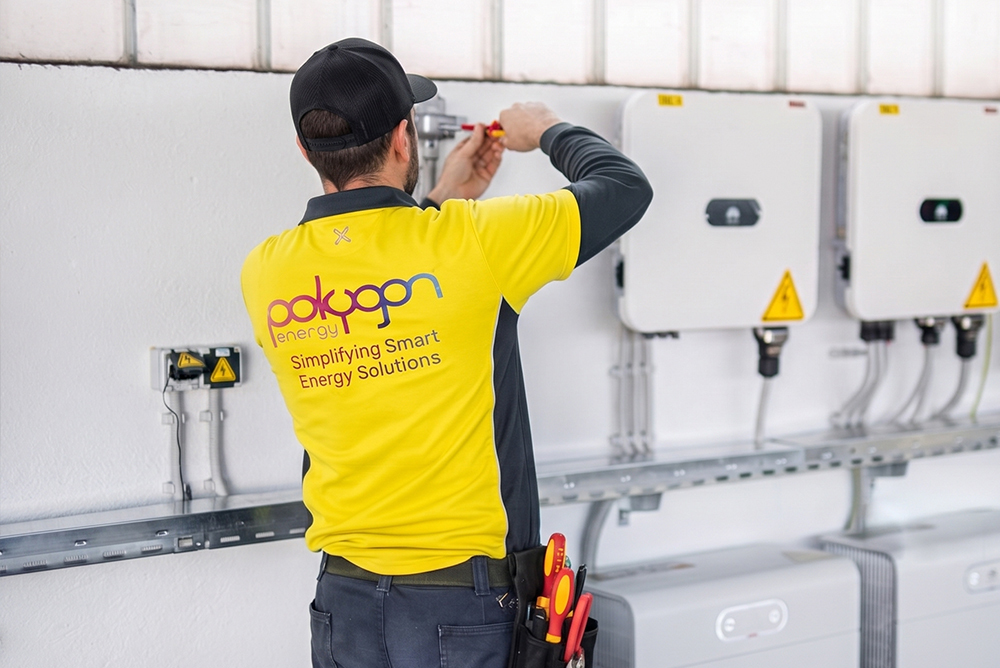
Polygon Energy, an installer working in the ACT and NSW, reports that a 10.12 kW microinverter system cut one Canberra household’s power bills by more than 90%. The figures below come from Polygon’s own case study page and have not been independently verified.

The brief.

An ACT household with heavy daytime and night-time power use wanted a premium, high-efficiency system. It needed to generate well despite potential shading, offer panel-level monitoring and be ready for a battery later.

What was installed.

A 10.12 kW solar PV system using Enphase microinverters, which convert power at each panel rather than at one central inverter. Polygon says this lets the Enphase Enlighten app track each panel and the household’s consumption in real time. The system was designed so a battery can be added later.

Reported results.

MeasureReported figure
Annual electricity savings$2,300
Payback period9 years
Bill reduction over the payback periodMore than 90%, with near-zero bills afterwards
Return on investment17%

How it relates to the programs above. 

This project is in the ACT, so the NSW Home Energy Saver and ESS incentives described in this article would not apply to it. It is useful as an example of a design that leaves room for a battery. Polygon notes the household can later look at battery incentives, including the federal Cheaper Home Batteries Program. NSW households should check which battery incentives are currently open, since the NSW installation incentive (PDRS BESS1) was suspended when the federal program started.

Which option is right for you?

  • Household income above $210,000. You are outside the Home Energy Saver loan and discount, but ESS, PDRS and federal incentives may still apply to your purchase.
  • Income between $80,000 and $210,000. The loan is your main Home Energy Saver option, alongside ESS and other incentives.
  • Income up to $80,000 or a concession card. Check the discount first. It can be combined with a loan if your project costs more than the discount.
  • Landlords. You can access the loan. Your tenant may be eligible for the discount, but they must apply for it themselves.
  • Renters. The discount is the relevant option, with landlord approval.

A practical checklist before you apply

  1. Confirm whether Home Energy Saver discount applications are open, and if you qualify, apply for the discount before the loan.
  2. Get quotes from installers approved by your chosen lender, and check NETCC accreditation.
  3. Ask each installer to itemise every incentive: federal, ESS or PDRS, Home Energy Saver discount and loan.
  4. Check the loan terms with the lender, including any fees and its assessment criteria.
  5. Make sure the product you want is on the current eligible list.
  6. Keep your paperwork, including warranties and certificates of electrical safety.
  7. Be wary of door-to-door offers. Unsolicited doorknocking for these schemes is banned.

Frequently asked questions

Is the Home Energy Saver a rebate?

Not entirely. The loan must be repaid, although it carries no interest. The discount is a genuine price reduction that is not repaid.

Can I get both a discount and a loan?

Yes. If you are eligible for both, you can use them together on one project. Apply for the discount first.

Do I have to pay anything with the discount?

Yes. There is a minimum contribution of at least $200, or 10% of the cost above $4,000 if that is higher.

Does the ESS require an application?

No. Incentives are applied through accredited providers when you buy an eligible product.

Will these programs change?

Probably. The ESS and PDRS rules are updated at least annually, and the government is consulting on wider reform. Always check the current rules.

Home

Services

Our Work

FAQs

Ask Away

Request a Quote

About Us

Contact Us