What does "usable capacity" mean?
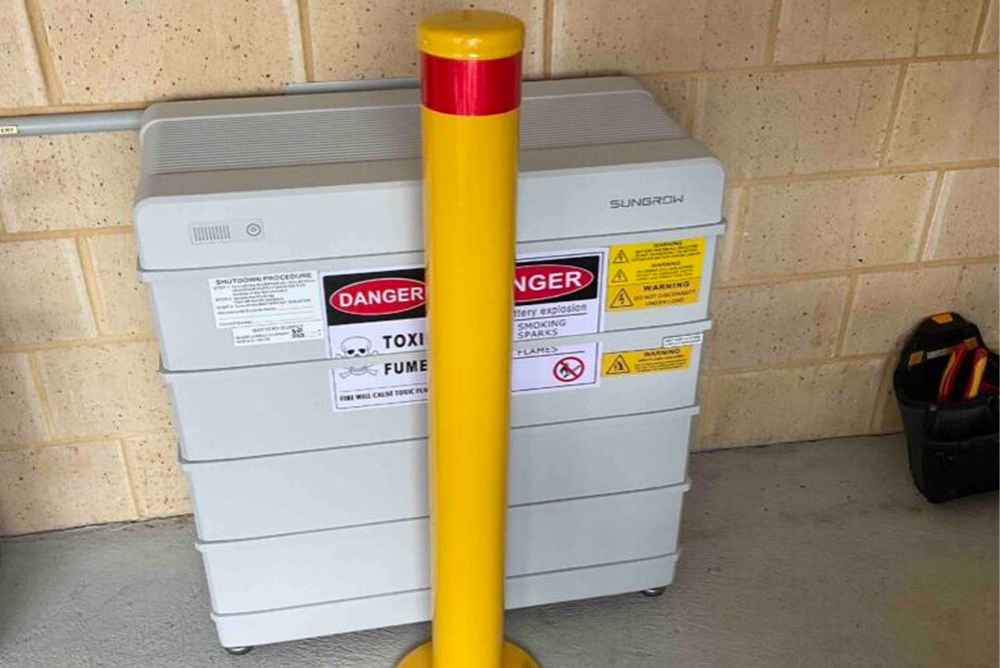
Usable capacity is the energy a battery can actually deliver to your home. It is lower than the headline “nameplate” figure because batteries keep a reserve to protect their lifespan. Always compare quotes on usable kWh. A 15 kWh nameplate battery might offer only 13 to 14 kWh usable, and the rebate is calculated on the usable figure.
How do you calculate the right battery size?
- Find your evening and overnight use. Check your retailer app or smart meter data for consumption between about 5 pm and 7 am. A typical family might use 8 to 15 kWh in that window.
- Check your daily solar surplus. The battery fills from solar energy you don’t use during the day. If your panels export 6 kWh on a typical day, a 20 kWh battery will rarely fill.
- Choose the smaller of the two. Your ideal usable capacity sits near the lower of your night-time use and your daily surplus.
- Add allowances only for real plans. Include an EV, heat pump or electric hot water only if you’ve committed to them.
What battery size suits different households?
| Household | Typical usable size | Main reason |
|---|
| Couple, low evening use | 5–10 kWh | Covers evening peak |
| Average family of four | 10–15 kWh | Covers evening and most overnight use |
| Family with electric hot water or heat pump | 13–20 kWh | Higher night-time load |
| Large home with EV and pool | 20–25 kWh | Needs a large solar array to fill it |
These are rules of thumb. Your own usage data should override them.
How does the federal rebate affect battery size?
The Cheaper Home Batteries Program launched on 1 July 2025 and offered roughly 30 percent off the upfront cost of an eligible home battery. From 1 May 2026 it changed in two ways: the STC factor declines faster and updates twice yearly, and the rebate tapers as battery size increases from 0 to 50 kWh.
The tapering works in bands. The first 14 kWh gets 100 per cent of the factor, the next band to 28 kWh gets 60 per cent, and capacity above that gets 15 per cent. In practice, the 14–28 kWh band earns 4.08 STCs per kWh and the 28–50 kWh band earns 1.02 STCs per kWh at the May–December 2026 factor.
The government says the design aims to maintain a discount of around 25% across small, medium and large batteries. In plain terms, a typical household battery keeps a strong discount, while very large batteries lose most of their extra support.
How much rebate will you get at each size?
Using the May–December 2026 factor and an assumed certificate price of about $38 (the price moves), one installer’s worked examples show:
| Battery size | Estimated rebate from May 2026 |
|---|
| 10 kWh | About $2,584 |
| 25 kWh | About $5,323 |
| 50 kWh | About $6,641 |
Doubling a battery from 25 kWh to 50 kWh adds roughly $1,300 in rebate. Doubling it from 10 kWh to 20 kWh adds far more. That is the core sizing insight: above about 14 kWh, each extra kilowatt-hour costs you more of your own money.
The market has responded. Reporting suggests average installed battery size fell from around 40 kWh to around 25 kWh after the policy shift.
Does timing change the rebate?
Yes. The rebate value per kWh falls every six months. Published estimates show $272 per kWh for May–December 2026, $228 for January–June 2027 and $208 for July–December 2027. The scheme steps down again each January and July. The same source also notes that you should expect to lose about 10% of the rate to admin fees, so your quote may show a slightly lower net figure.
If you’re ready to buy, waiting for a larger battery size rarely beats installing the right size sooner, because the rate drop each half-year outweighs most small gains from waiting.
What happens if you buy a battery that is too big?
An oversized battery rarely fills completely, so you pay for capacity you don’t use. It also earns less rebate per kWh above the 14 kWh band. The payback period lengthens, and you may not gain much more self-sufficiency, because your household still can’t use more than it consumes.
What happens if you buy a battery that is too small?
An undersized battery runs out early in the evening and you buy peak-rate grid power for the rest of the night. This is usually the cheaper mistake. A smaller battery that cycles fully every day often delivers a better return than a larger one that cycles half-full. If your usage may grow, ask whether the system can be expanded later with a compatible module.
Does your solar system affect battery size?
Strongly. A battery is only as useful as the surplus solar that charges it. A small 5 kW array can’t fill a 25 kWh battery on most days. Before sizing a battery, check your solar output in winter as well as summer, and consider whether the inverter and panels suit the battery you want.
What if you're adding a battery to existing solar?
Three things matter most. Coupling: AC-coupled batteries suit most retrofits, while DC-coupled systems usually suit new solar installs. Inverter age: an older inverter may be near end of life, which can make a hybrid replacement sensible. Export limits: network limits can cap how much solar you send to the grid, which can change how much surplus is available to charge the battery.
Do you need a bigger battery for backup power?
Not necessarily. Backup depends more on the inverter and wiring than on battery size. A 10 kWh battery with a backup-capable inverter can keep essential circuits running through an outage, while a 25 kWh battery without backup hardware will shut down with the grid. Decide which circuits you need to run (fridge, lights, internet, medical equipment) and ask for a quote that lists them.
What should you ask an installer before choosing a size?
- What is the usable capacity, not just the nameplate?
- Which rebate band does this size fall into, and what is the expected rebate today?
- Is backup included, and which circuits does it cover?
- Is the battery on the approved product list, and is the installer accredited?
- Can the system be expanded later?
Frequently asked questions
What size battery do I need for a four-person home?
Typically 10 to 15 kWh usable, depending on evening and overnight use.
Is 13.5 kWh enough?
For many average households, yes. It sits inside the full-rebate band.
Does a bigger battery get a bigger rebate?
Yes, but returns diminish sharply above 14 kWh.
Can I size a battery for a future EV?
Only if you’ve committed to buying one, since rebate rates fall every six months and extra capacity is costly.
Do I need new solar to get a battery?
No. Batteries can be added to existing solar, though your inverter and coupling type affect the options.
Will the rebate still be available next year?
The program continues, but the per-kWh value keeps declining on the published schedule.