
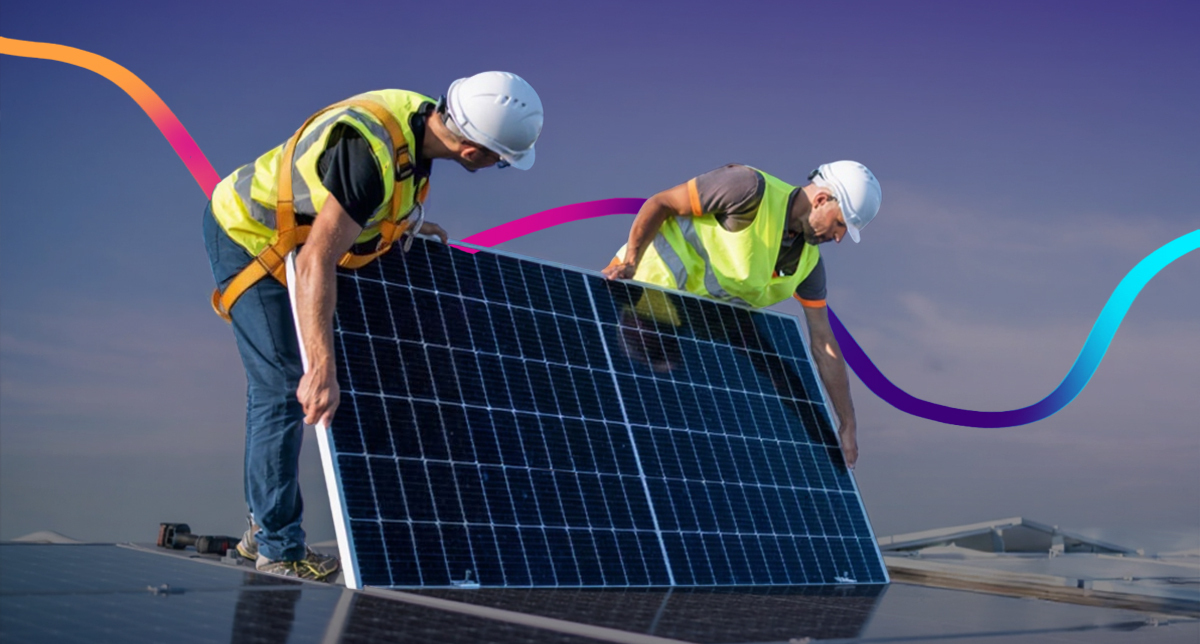
Canberra stands apart as Australia’s most advanced solar market. With abundant sunlight, a cool climate, and some of the country’s most progressive clean-energy policies, the ACT offers unmatched conditions for long-term solar performance. When engineered correctly, quality solar systems in Canberra consistently outperform national averages—delivering higher yields, faster payback, and superior grid resilience.
As solar engineers at Polygon Energy, we’ve designed and deployed thousands of systems across residential, commercial, and community-scale projects. This 2026 engineering guide brings together real-world data, component science, rebate strategy, and installation best practice to help homeowners and businesses build quality solar systems in Canberra that perform reliably for decades.
Canberra receives over 2,800 sunlight hours annually, averaging 4.8–5 peak sun hours per day. Unlike hotter regions, the ACT’s cooler climate (average annual temperature ~15°C) significantly reduces thermal losses. Most solar panels lose 0.3–0.5% efficiency for every degree above 25°C—meaning Canberra panels routinely operate at 98–99% of rated efficiency, compared to 10–15% losses in hotter cities.
This climate advantage translates directly into performance. A well-engineered 6.6kW quality solar system in Canberra typically generates 9,500–11,000 kWh per year, enough to offset 100–120% of an average household’s annual electricity usage (~5,500 kWh).
The ACT Government’s commitment to 100% renewable electricity by 2045 has further accelerated adoption, with rooftop solar penetration exceeding 50% of detached homes. This widespread uptake has reduced daytime grid demand and increased the importance of smart self-consumption strategies—particularly batteries.
Not all systems are equal. Quality solar systems in Canberra succeed because they combine:
Engineering insight: Panels installed at a 30° south-facing tilt in Canberra produce 5–7% higher winter output, improving annual consistency and reducing reliance on the grid during shorter days.
With battery integration, self-consumption rates jump from 30–40% to 70–90%, dramatically increasing ROI—especially as grid electricity prices rise.
High-performance panels form the foundation of all quality solar systems in Canberra. We recommend Tier-1 manufacturers with proven field data, low degradation, and strong Australian warranties.
Top-performing options include:
REC Alpha Pure-RX
AIKO Neostar Bifacial Panels
All recommended panels meet IEC 61215 standards, with resistance to 25mm hail, 5,400Pa wind loads, and extreme temperature cycling—critical for long-term reliability in the ACT.
Inverters: Matching Technology to Roof Design
Inverters are the control centre of quality solar systems in Canberra, and the right choice depends heavily on roof layout and shading.
Best suited for:
Leading options:
Performance highlights:
Ideal for:
Enphase IQ8 microinverters deliver:
Polygon Energy data shows 18% higher annual output on east-west Canberra homes using microinverters versus traditional string setups.
Batteries: The Key to Energy Independence
Batteries transform solar from a bill-reduction tool into a full energy strategy. Under current incentives, batteries are now essential to quality solar systems in Canberra.
Preferred battery technologies:
Top performers:
These systems integrate seamlessly with hybrid inverters and are fully compatible with the Cheaper Home Batteries Program.
The Cheaper Home Batteries Program is one of the most impactful incentives ever offered in the ACT. It provides a battery rebate of up to 30% on eligible systems, calculated per usable kilowatt-hour.
Important: From May 1, 2026, rebates taper for larger systems, prioritising small-to-medium residential installations. Acting early secures maximum value.
Feed-in tariffs in Canberra range from 5–12c/kWh, while grid electricity costs 25–35c/kWh. The math is simple:
By leveraging the battery incentive, homeowners store excess solar at near-zero cost and use it during peak evening demand—maximising self-consumption and insulating against future price rises.
These outcomes highlight how quality solar systems in Canberra, when engineered correctly, deliver both individual and grid-wide benefits.
Not all installers deliver true quality solar systems in Canberra. Look for:
Avoid:
Polygon Energy differentiates through:
Advanced designs like DC-optimised strings combine the benefits of string and microinverters at lower cost—ideal for Canberra rooftops.
Well-maintained quality solar systems in Canberra retain over 92% output at year 25.
Best practices:
Polygon’s monitoring platform ensures 99% uptime, protecting the full value of battery incentive-backed assets.
A typical 6.6kW solar + 13kWh battery system costs approximately $18,000 net after the Cheaper Home Batteries Program and rebates—saving $3,200 per year at current electricity prices.
Future-ready features include:
Canberra is uniquely positioned to lead Australia’s clean-energy future. With the right engineering, incentives, and installer expertise, quality solar systems in Canberra deliver unmatched performance, resilience, and financial return.
Polygon Energy brings proven experience navigating the Cheaper Home Batteries Program, battery rebate structures, and next-generation system design—ensuring every system performs beyond expectations.