
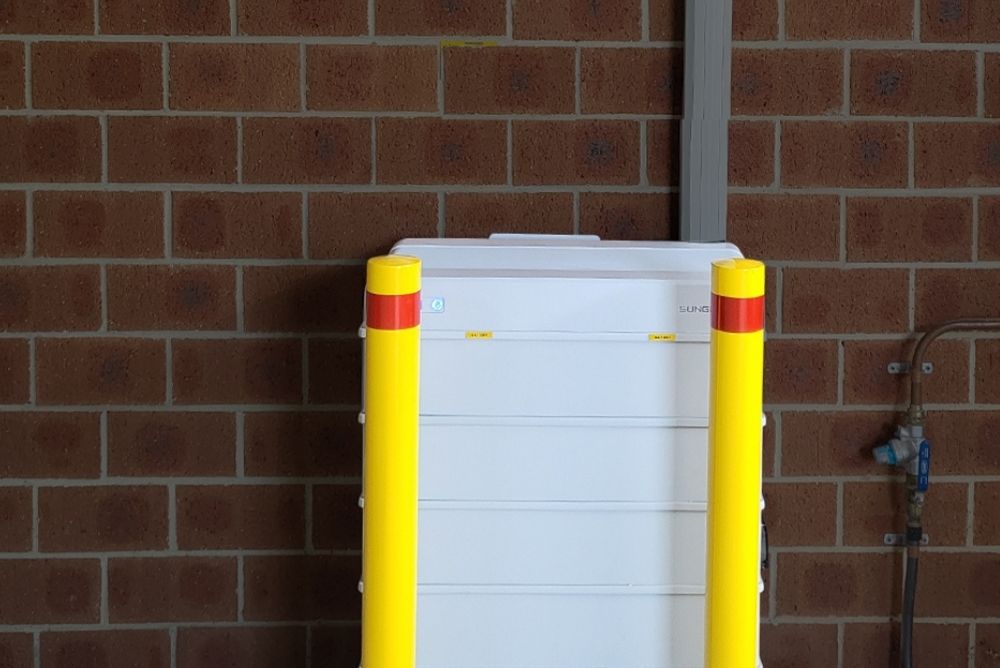
Australia stands at a pivotal moment in its clean energy transition. With rooftop solar now a familiar sight across suburbs, the next wave of adoption has naturally turned toward battery storage. Supported by initiatives like the Cheaper Home Batteries Program, the growing awareness around the NSW battery incentive, and broader frameworks such as the Battery incentive, homeowners are increasingly encouraged to store and optimise their energy.
Yet, wisdom lies not in adoption alone, but in discernment.
Not every home needs a large battery. In fact, for many households in 2026, oversized battery systems quietly erode financial returns while offering limited additional value. The future belongs not to excess, but to alignment. This is where thoughtful system design, grounded in real consumption patterns, becomes essential.
This article explores the deeper realities of battery adoption, helping homeowners understand when less is truly more.
The introduction of the Cheaper Home Batteries Program has undoubtedly shifted the affordability curve. With incentives reaching up to $311 per usable kWh and gradually tapering, the program has made battery systems more accessible to a wider audience.
At the same time, state-level support like the NSW battery incentive has further strengthened adoption by reducing upfront investment barriers. When viewed collectively with the broader Battery incentive ecosystem, the financial case for batteries appears compelling at first glance.
However, a closer examination reveals nuance.
Even after subsidies, a standard 13.5 kWh battery system can cost between $7,500 and $9,000. Larger systems exceed $18,000. While these numbers are lower than previous years, they still demand careful evaluation against actual household energy usage.
For many homes, especially those with moderate consumption, the savings generated do not immediately justify the scale of investment. The payback period can extend beyond 7–10 years, particularly when battery capacity exceeds actual nightly demand.
The lesson here is simple yet often overlooked: affordability does not automatically translate to suitability.
A typical Australian household consumes between 16 and 20 kWh per day. Smaller households operate within 8–12 kWh, while larger families may reach beyond 25 kWh.
Solar systems, on the other hand, often generate more energy than is consumed during daylight hours. A 6.6 kW system can produce 25–35 kWh daily in favourable conditions.
This creates a natural imbalance.
Energy is generated when it is least needed and required when it is not being produced. Batteries are designed to bridge this gap, but only to the extent that the gap exists.
Oversizing a battery does not create additional value. It simply creates unused capacity.
Even with support from the Cheaper Home Batteries Program, homeowners frequently install storage systems that exceed their actual nighttime usage. The result is idle storage, gradual degradation, and diminished returns.
The NSW battery incentive encourages self-consumption, but it does not require excess. Similarly, the broader Battery incentive framework is designed to promote efficiency, not overcapacity.
A well-sized battery, often between 5–10 kWh, is sufficient for most households. It supports essential loads without unnecessary surplus, aligning investment with real need.
Historically, batteries were seen as a safeguard against grid unreliability. In 2026, this assumption is increasingly outdated.
Australia’s energy infrastructure has evolved rapidly. Large-scale grid batteries, virtual power plants, and decentralised storage systems have collectively improved reliability across urban regions.
Programs supported by the Cheaper Home Batteries Program now focus on integration rather than isolation. The NSW battery incentive actively encourages participation in virtual power plants, where stored energy contributes to grid stability while generating additional income.
Within this ecosystem, the role of the individual battery changes.
It is no longer a standalone fortress, but a participant in a larger network.
The Battery incentive framework reinforces this shift by rewarding contribution over independence. Homeowners can now benefit from smaller systems that interact intelligently with the grid, rather than relying on oversized units designed for rare outage scenarios.
In cities where outages are infrequent, the need for large backup capacity becomes less practical and more psychological.
A thoughtful energy strategy does not rely on a single solution. Instead, it considers a spectrum of options, each aligned with the homeowner’s lifestyle.
Under the guidance of the Cheaper Home Batteries Program, many households are now exploring alternatives that deliver comparable or better outcomes without heavy investment.
Feed-in tariffs continue to offer value, allowing excess solar energy to be exported for financial return. The NSW battery incentive complements this by encouraging balanced energy use rather than forced storage.
Modular battery systems provide flexibility, enabling homeowners to expand capacity only when required. This approach aligns seamlessly with the principles of the Battery incentive, where scalability replaces rigidity.
Energy efficiency remains one of the most overlooked yet powerful tools. By reducing consumption through efficient appliances and smarter usage patterns, households can achieve significant savings without additional infrastructure.
Virtual power plants further enhance this ecosystem. By participating in grid services, homeowners unlock additional revenue streams while contributing to national energy stability.
Each of these pathways reflects a deeper truth: optimisation is more valuable than accumulation.
A recent Polygon Energy installation offers a clear demonstration of this philosophy in practice.
The project was designed for an environmentally conscious homeowner who also owns an electric vehicle. The objective was not to maximise capacity, but to maximise efficiency within spatial and operational constraints.
The system combined a 15 kW SMA solar setup with smart storage and fast EV charging capabilities.
The approach was implemented in phases.
The first phase included a 15.54 kW solar PV system paired with a 15 kW SMA inverter. Tigo DC optimisers were used to ensure maximum panel efficiency, particularly in conditions where shading or layout constraints might otherwise reduce output.
The second phase introduced a Tesla Powerwall+ with 13.5 kWh capacity. This provided reliable energy storage and seamless backup during outages. A Tesla Wall Connector Gen 3 enabled high-speed EV charging, delivering up to 48A for efficient home charging.
Smart energy management was central to the system. Through an integrated mobile application, the homeowner could monitor consumption, optimise battery usage, and schedule EV charging based on solar availability.
The results were significant.
Grid dependence was reduced substantially. Annual savings reached approximately $3,700. The payback period was achieved in just 3.3 years. The system delivered reliable backup power, optimised EV charging, and a measurable reduction in carbon footprint.
Most notably, the return on investment reached 20%.
This outcome was not the result of installing the largest possible battery. It was the result of alignment.
Discover more thoughtfully designed energy solutions explore our case studies at Polygon Energy
The system worked because it was designed around actual needs, supported by frameworks like the Cheaper Home Batteries Program, enhanced through the NSW battery incentive, and guided by the principles embedded within the Battery incentive ecosystem.
Energy systems do not exist in isolation. They are shaped by the lives they support.
A household where occupants are away during the day will generate excess solar energy but consume little of it. In such cases, the role of a battery becomes more specific and limited.
Conversely, households with higher evening consumption may benefit from modest storage solutions that align with their usage patterns.
The Cheaper Home Batteries Program acknowledges these variations by supporting a range of system sizes rather than prescribing a single solution. The NSW battery incentive further reflects this adaptability by rewarding behaviour rather than scale.
Even within the broader Battery incentive landscape, flexibility is emerging as a defining principle.
Factors such as roof orientation, shading, occupancy patterns, and EV ownership all influence system design. A one-size-fits-all approach cannot accommodate this complexity.
This is why energy audits are becoming an essential first step in the decision-making process.
Australia’s renewable energy journey is not moving toward larger individual systems. It is moving toward distributed intelligence.
The Cheaper Home Batteries Program is not just about reducing costs. It is about enabling smarter participation in a connected energy ecosystem.
The NSW battery incentive reflects this by encouraging integration with virtual power plants and dynamic energy markets. Meanwhile, the broader Battery incentive framework continues to evolve, prioritising efficiency, adaptability, and long-term sustainability.
Technologies such as vehicle-to-home integration, modular storage, and AI-driven energy management will further reduce the need for oversized systems.
In this future, value will not be measured by capacity alone, but by how effectively that capacity is used.
The question facing homeowners in 2026 is no longer whether to adopt battery storage. It is how to adopt it wisely.
The presence of incentives like the Cheaper Home Batteries Program, the support of the NSW battery incentive, and the broader momentum of the Battery incentive ecosystem make adoption more accessible than ever.
But accessibility must be guided by intention.
For most households, the path forward is clear:
Solar provides a strong foundation
Smaller batteries enhance efficiency
Smart design maximises returns
Oversizing, on the other hand, introduces unnecessary cost without proportional benefit.
Polygon Energy approaches every installation with this philosophy. By aligning system design with real-world usage, the focus remains on delivering outcomes that are not only financially sound but also environmentally meaningful.
In energy, as in life, wisdom lies in knowing not how much you can have, but how much you truly need.
Have questions? Simply visit Polygon Energy website and let the experts guide your next move.