The best battery system
is the one you will actually use

Battery rebates are still available and continue to
make these systems accessible.

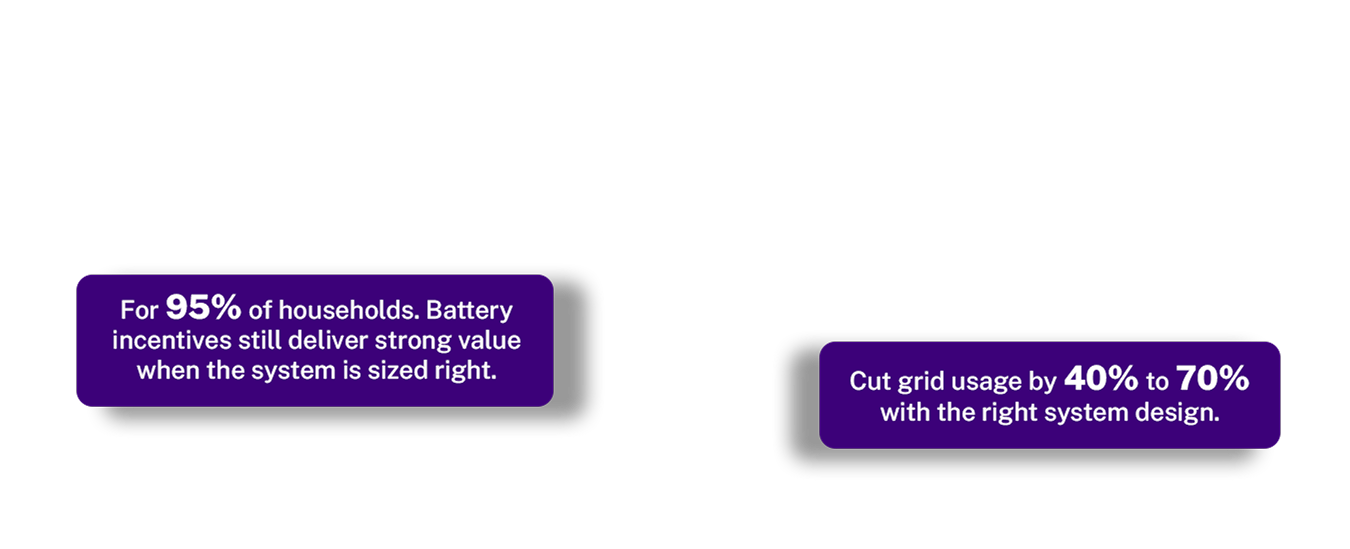
In reality:•  80% of homes work well with ~15 kWh• ~15% may need up to 30 kWh• Only 5% need more

Oversizing leads to:•  Higher cost without added value•  Lower energy utilisation•  Longer payback

Lower government support

Expensive battery installation later

Missed savings for this financial year

Lower government support

Expensive battery installation later

Missed savings for this financial year

If you are considering a solar battery for your home or business, timing is not just important. It directly impacts your return on investment.

We manage eligibility, rebate compliance, and installation from start to finish so you can proceed with clarity.

Most Homes Are Being Oversold on Battery Size

Incentives are still available today,
but are expected to reduce again from 1 January 2027.

The opportunity is not in installing more.It is in installing correctly, while incentives still support the investment. 

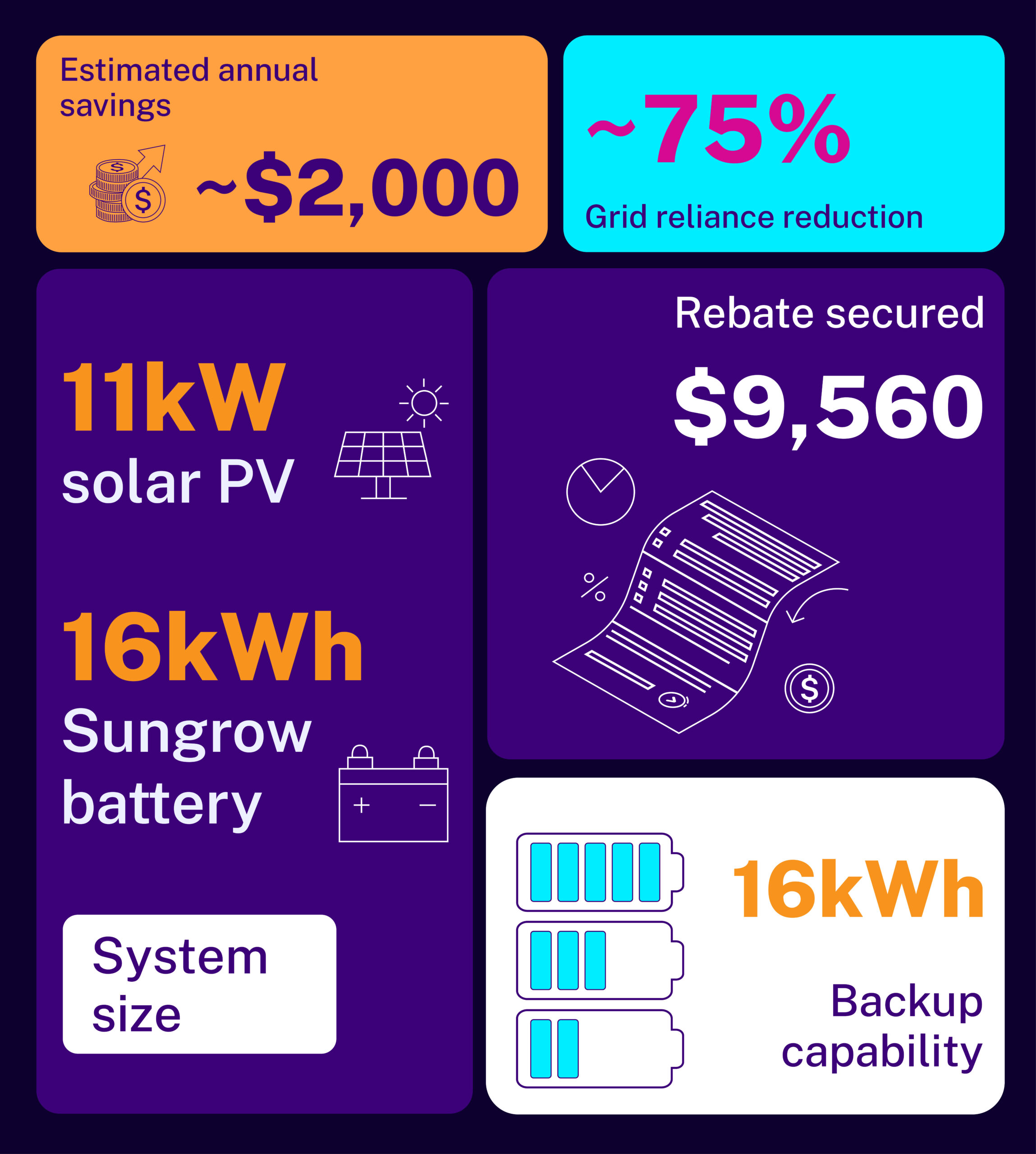
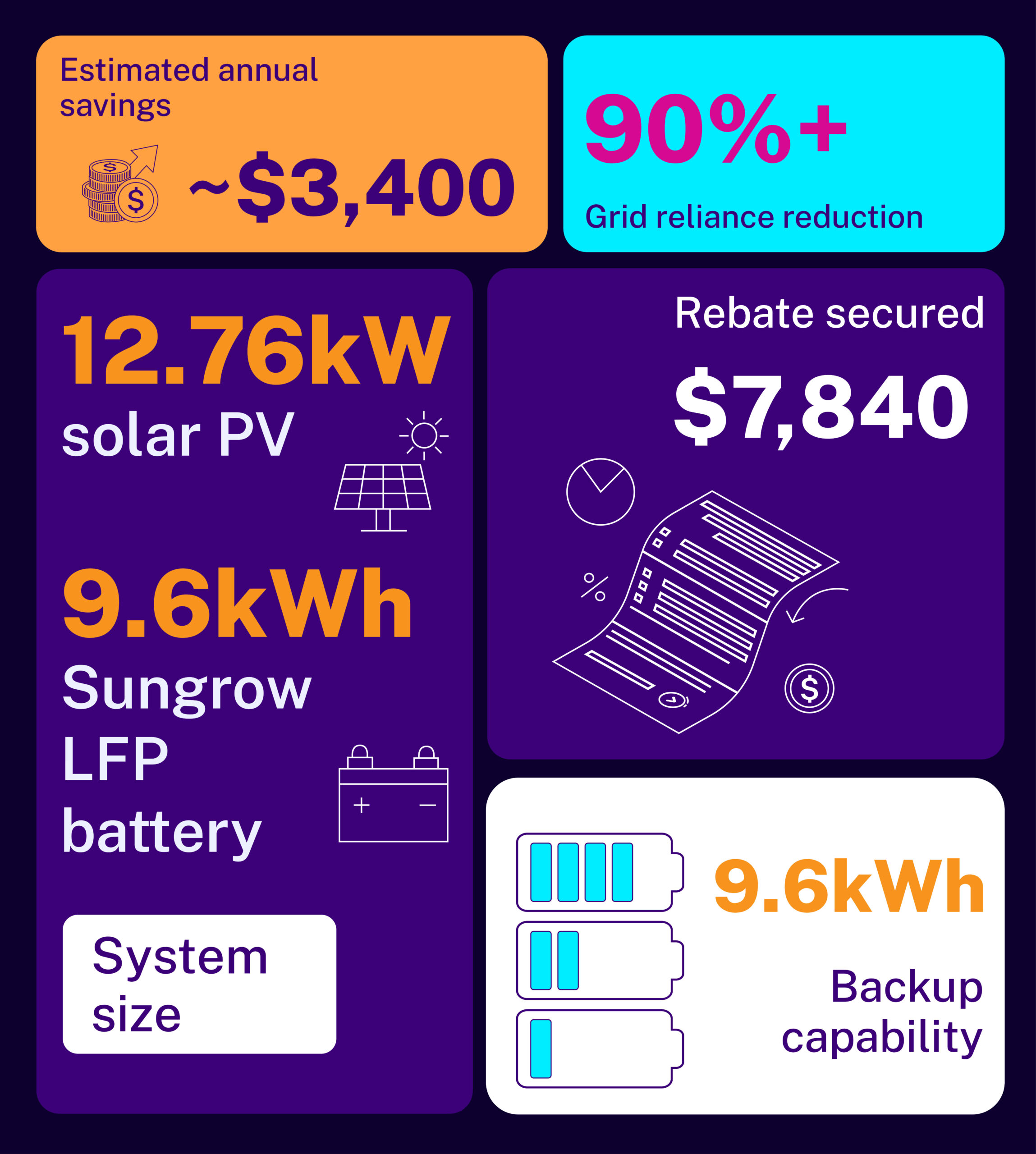
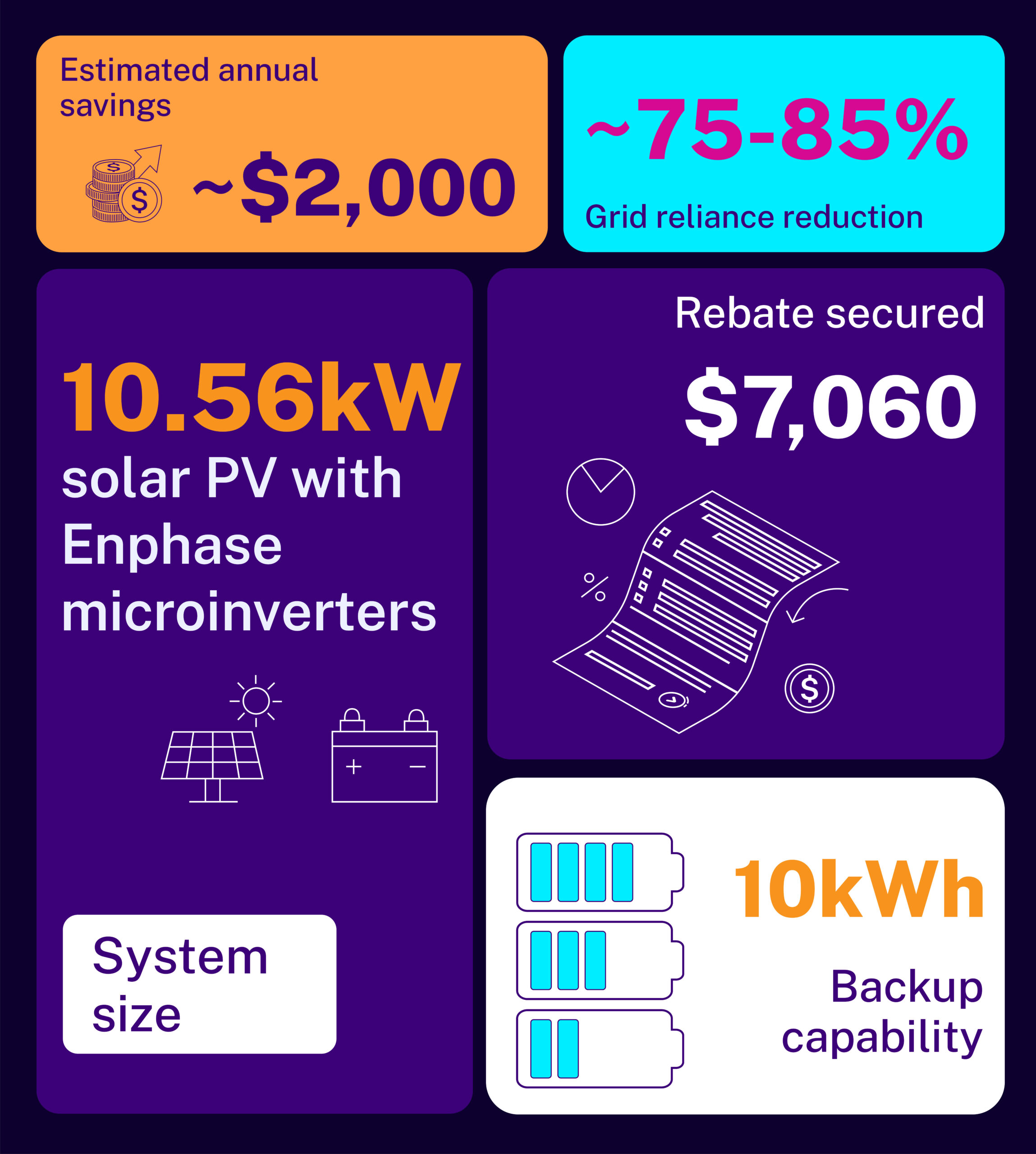
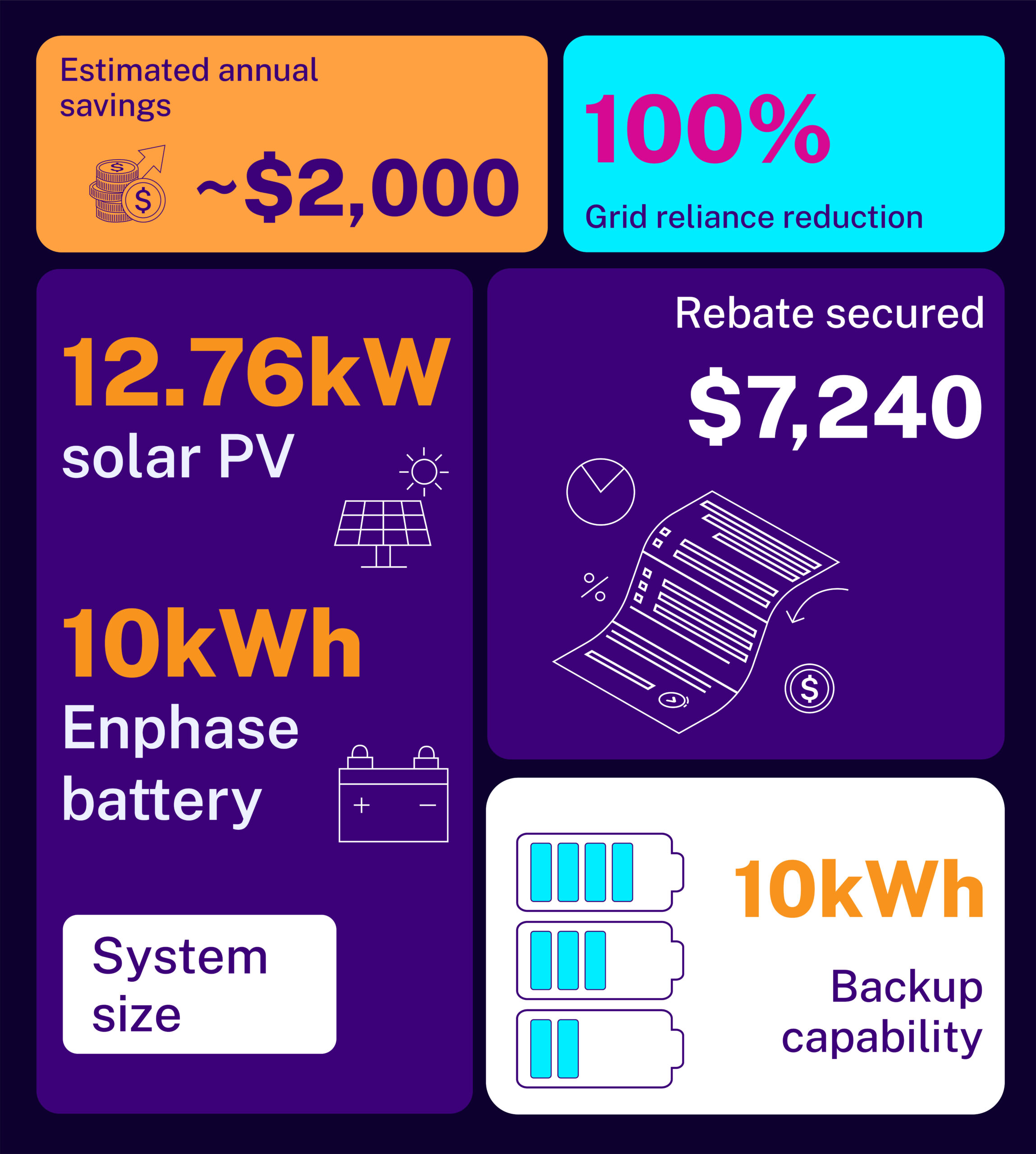
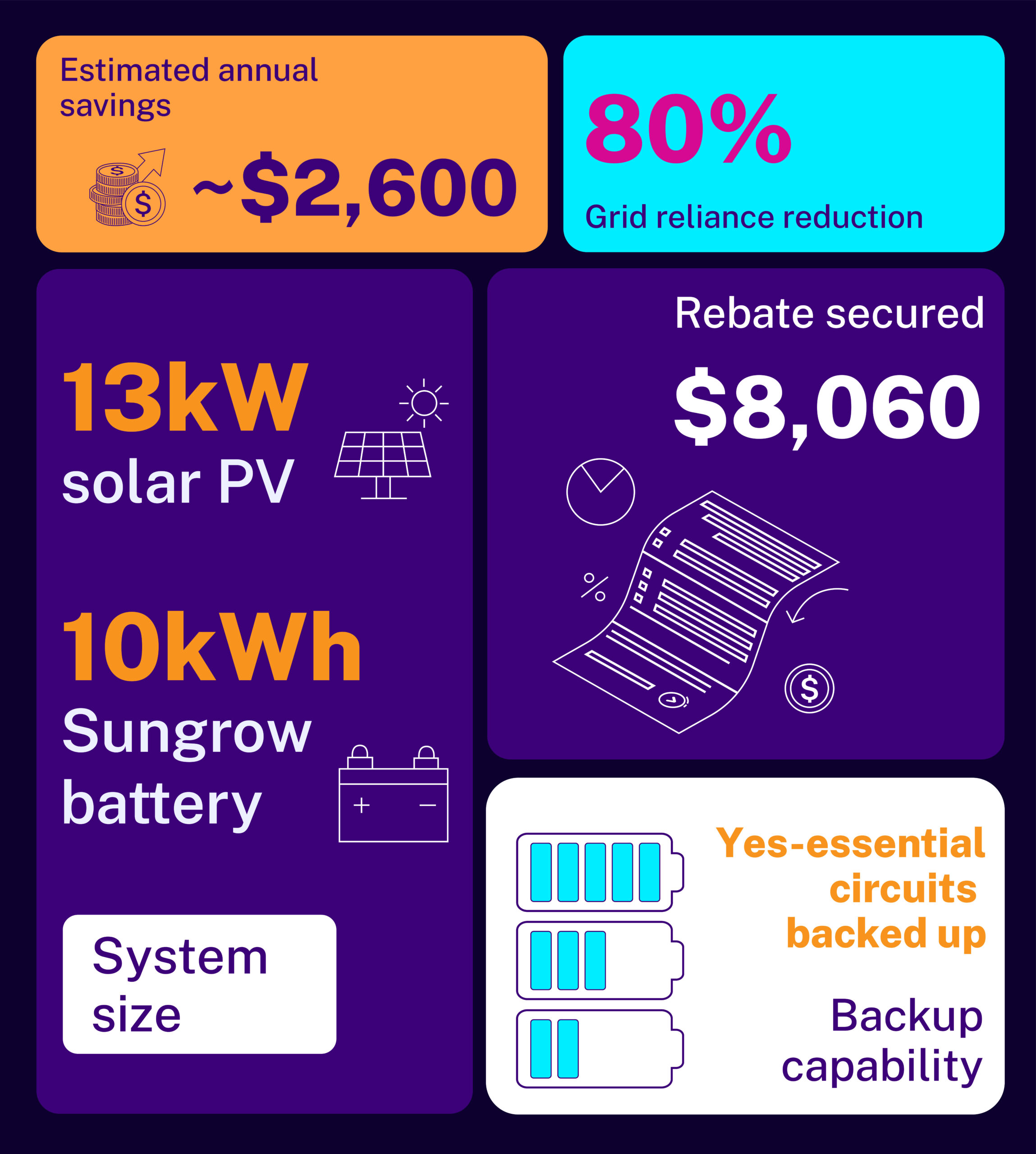
Real Rebate Results

Premium Battery Systems
Built for Australian Conditions

We work with industry leading battery brands designed for Australian conditions, including:

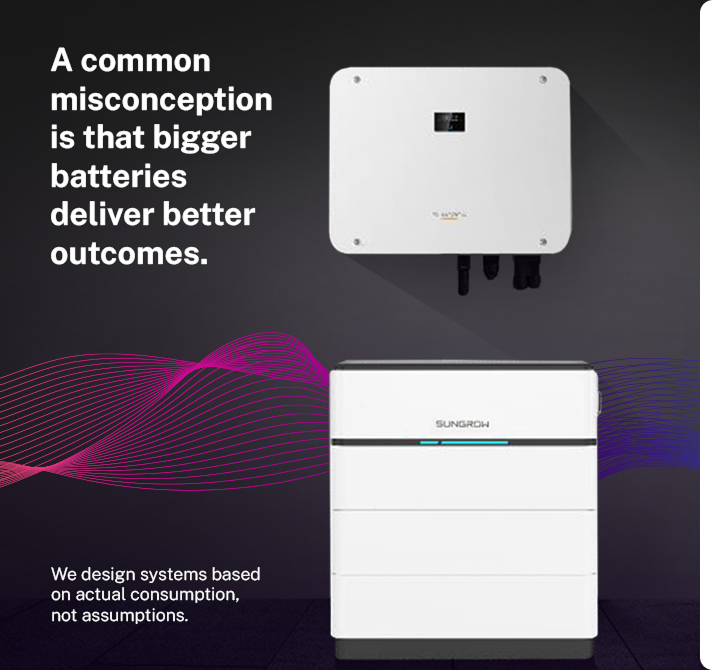
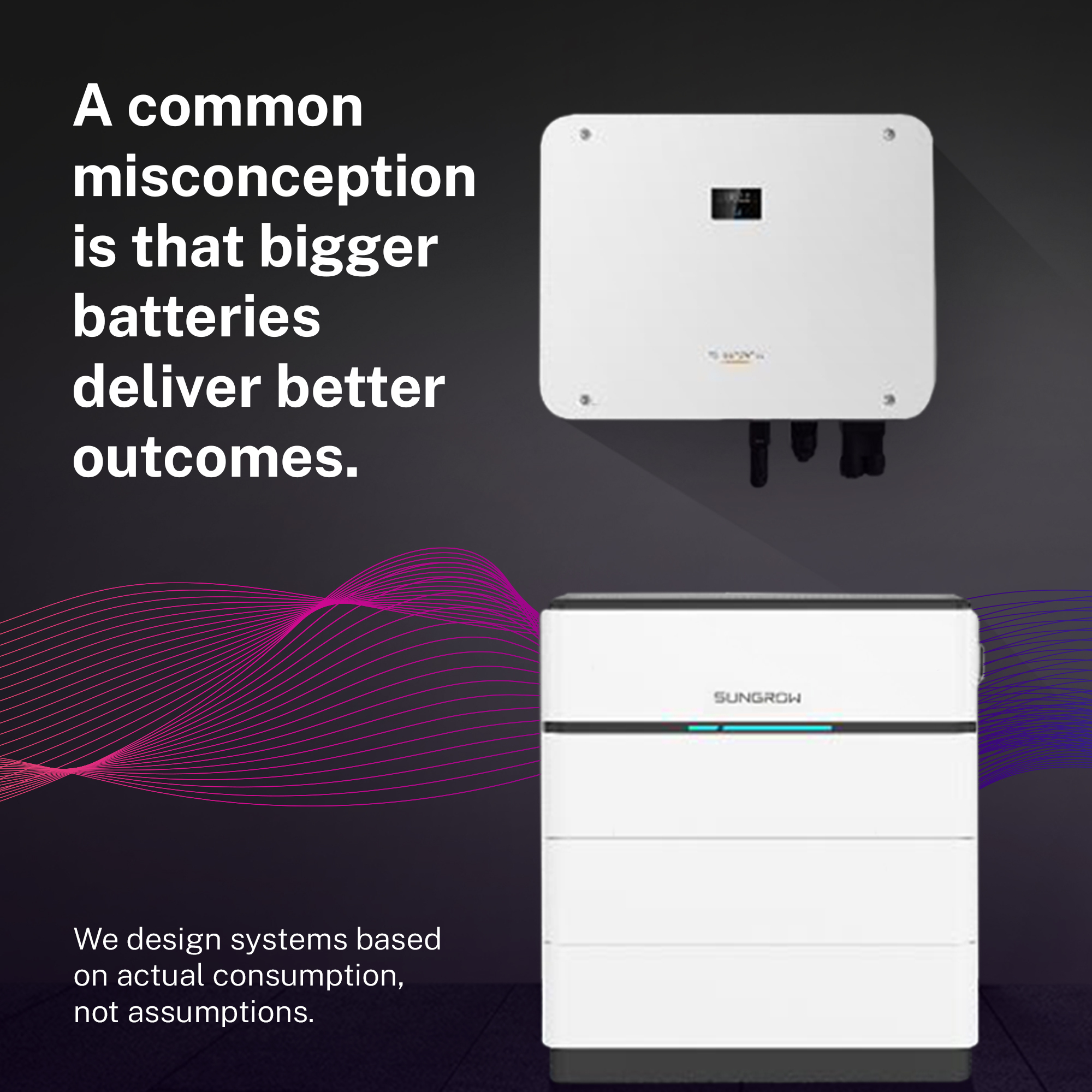
Every system is designed around your energy usage, roof layout, and future expansion needs.

Home Battery Comparison

Features
Battery icon
Tesla Powerwall 3
Battery icon
Sungrow SBR Series
Battery icon
Sigenergy SigenStor
Battery icon
Alpha ESS
Usable Capacity13.5 kWh9.6 – 25.6 kWh (Modular)5 – 48 kWh (Highly Modular)10 – 20+ kWh (Modular)
Continuous Power OutputHigh – Whole Home CapableStrong – Hybrid DependentVery High – Stack ScalableModerate
Built-in Inverter✅ Yes (Integrated)❌ Requires Hybrid Inverter✅ 5-in-1 Integrated System❌ Requires
Hybrid Inverter
Backup CapabilityWhole Home
(with correct design)
Partial / Whole HomeWhole Home + Fast EPSPartial / Essential Loads
ExpandableYesHighly ModularHighly Modular (Stackable)Modular
EV Charger Integration❌ No❌ No✅ Optional Integrated
EV Charger
❌ No
App MonitoringTesla AppiSolarCloudSigen App (AI Optimised)Alpha App
VPP CompatibleYesYesYesYes
Warranty10 Years10 Years10 Years10 Years
Estimated Installed Price
Before Rebate
~$15,000 – $17,000~$9,000 – $12,500~$14,000 – $18,000~$8,999 – $13,000

Final installed price depends on system size, inverter pairing, backup configuration, switchboard upgrades, and rebates.

We design your system based on real usage, not generic estimates.

30 Minute Call

No Obligation

Expert Advice

Book your free
battery assessment

Speak directly with an energy professional to confirm your
rebate eligibility and system design.

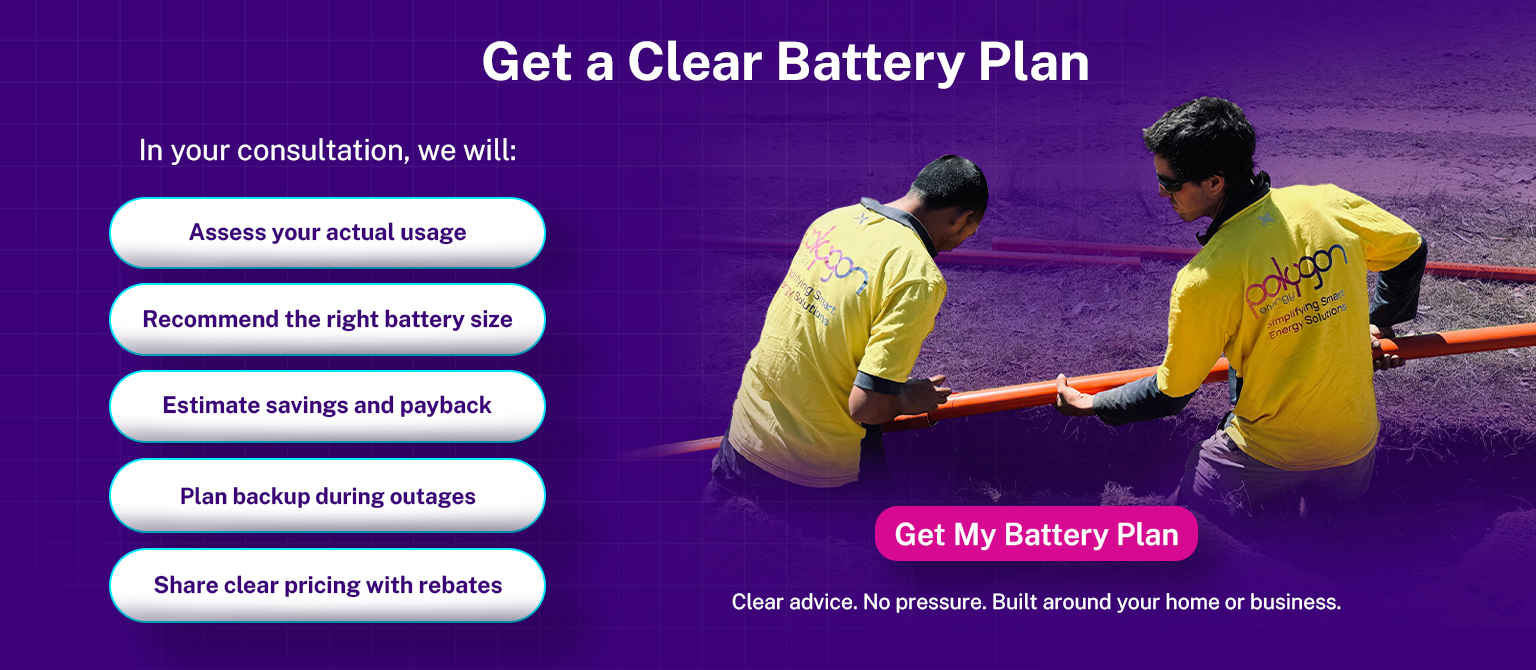
What you will get in this call

Confirmation of your rebate tier

Accurate savings projection based on your usage

Recommended battery size and configuration

Blackout protection assessment for your property

Clear pricing with finance options

Trusted Across Homes and Critical Infrastructure

A system is only as good as its design and installation

20+ years of combined experience

Award winning commercial projects

Polygon Energy
delivers reliable
battery systems
for homes,
small businesses
and critical operations

SAA accredited installers

Approved systems
meeting Australian standards

Experience across off grid
and critical infrastructure

Strong local support and after sales

Installation is just the start. Reliability is what matters

Why Batteries Still Make Sense

Even after May 2026, installing a battery continues to be a practical and financially sound decision.

Reduce reliance on
grid electricity

Protect against
rising energy costs

Store and use your
solar more effectively

Maintain essential
power during outages

FAQs

No, the rebate is not ending after May 1. The program continues until 2030, so support for battery installations is still available.

The rebate continues, but reduces over time and is reviewed every six months.Expect around 5 percent to 10 percent lower incentives each year, which could mean AUD 1,000 to AUD 3,000 less for the same system if you install later.

Eligible systems can currently receive a discount of around 20 percent to 30 percent, depending on the battery size and installation timing.For example, a typical home battery system could see savings of approximately AUD 4,000 to AUD 8,000, depending on system size and location.

The rebate is designed to reduce over time as battery costs come down. This includes the gradual reduction in STC value, helping extend the program and support more households over the long term.

After May 1, the rebate is structured based on battery size and STC allocation.
 
  • Higher value per kWh for the first portion of battery capacity
  • Lower value for additional capacity beyond that

For most homes, a system in the range of 10 kWh to 15 kWh is typically sufficient and offers better value.

Yes, delaying your installation can lead to lower savings.
 
  • STC values reduce every year

  • Incentives are adjusted every six months

This means the same system could receive thousands less in rebates if installed later.

No, there is no separate application required from your side. Your installer manages the STC process and the discount is typically included in your quote.

The program remains available to homeowners and small businesses installing eligible solar and battery systems, subject to meeting the program requirements.To know more, connect with a Polygon Energy expert.

Installing sooner allows you to take advantage of higher STC values and better incentives.Right sizing your battery, typically around 10 kWh to 15 kWh for an average home, ensures you get maximum value without overspending.

Adding a battery to your solar system can significantly improve your energy independence and savings, especially if you:

  • Use more electricity during the evening
  • Want backup power during blackouts
  • Want to reduce reliance on the grid
  • Are on a time-of-use tariff or have low feed-in rates
  • Plan to join a Virtual Power Plant (VPP)

With the launch of the Cheaper Home Battery Program (July 2025), eligible households can receive up to 30% off the battery installation cost, making solar batteries more affordable than ever.

Polygon Energy offers expert advice, system design, and installation of hybrid and retrofit battery solutions for homes and businesses.

The ideal solar battery size depends on your:

  • Daily electricity usage

  • Solar system size

  • Backup needs during outages

  • Time-of-use billing or VPP participation

  • Budget and incentive eligibility

For homes, typical battery sizes range from 5 kWh to 13.5 kWh. Businesses may require 15 kWh to 100 kWh+, depending on load and peak usage.

Polygon Energy conducts detailed energy audits and usage modelling to recommend the right battery capacity tailored to your energy profile and return on investment goals.

Battery savings depend on how much stored energy offsets your evening grid usage and whether you’re part of a time-of-use tariff or VPP. Key benefits include:

  • Avoiding peak electricity rates


  • Maximising solar self-consumption


  • Reducing power bills by up to 60–90%


  • Earning credits via VPP programs


  • Improving blackout protection


Combined with the federal battery rebate and solar feed-in tariffs, many households and businesses achieve battery payback in 6–10 years depending on usage and setup.

Polygon Energy provides a detailed battery return-on-investment (ROI) report with every quote.

Yes, batteries can work without solar panels, especially when:

  • Used to shift grid energy for time-of-use savings

  • Paired with off-peak or EV charging strategies

  • Installed in homes expecting future solar upgrades

  • Supporting critical loads during outages

However, batteries are most cost-effective when charged with free solar energy. Polygon Energy offers battery-only solutions and scalable setups that allow future solar integration.

Yes, batteries can work without solar panels, especially when:

  • Used to shift grid energy for time-of-use savings


  • Paired with off-peak or EV charging strategies


  • Installed in homes expecting future solar upgrades


  • Supporting critical loads during outages


However, batteries are most cost-effective when charged with free solar energy. Polygon Energy offers battery-only solutions and scalable setups that allow future solar integration.

If your system includes a solar battery with backup capability, it can power critical loads during a blackout, including:

  • Lights

  • Fridge/freezer

  • Internet/Wi-Fi

  • Medical devices

  • Security systems

Most hybrid inverters are programmed to isolate your home from the grid during an outage, keeping your battery and solar system operating safely.

Polygon Energy designs blackout-ready solar and battery systems with custom backup circuits to suit your home or business needs.

The most common battery technologies used in solar energy storage in Australia include:

  • Lithium-ion (LiFePO4 / NMC) – Most popular for residential and commercial systems; high efficiency and long life.

  • Brands: Tesla Powerwall, Sungrow, Redback, AlphaESS, BYD, Pylontech

  • Flow batteries – Longer lifespan, lower degradation, ideal for large-scale or remote use

  • Lead-acid (AGM/Gel) – Low-cost, but less efficient and used mainly in legacy off-grid systems

Polygon Energy supplies Tier 1 battery systems with long warranties, app-based monitoring, and integration with VPPs and smart load control.

The program aims to provide a discount of around 30% on the upfront cost of a battery. The exact amount depends on the battery’s usable capacity (kWh) and the “STC factor” at the time of installation.

Yes. Under the Cheaper Home Battery Rebate Program, the rebate is designed to decrease every six months until 2030 as battery prices continue to fall.

Yes. The discount is available for batteries connected to both new and existing solar PV systems.

Install before 1 May 2026 to access the highest STC factor before it reduces
 
  • 0–14 kWh: 100% of the STC factor (highest rebate per kWh)
  • 14–28 kWh: 60% of the STC factor
  • 28–50 kWh: 15% of the STC factor

To get the rebate, your installer must be accredited by Solar Accreditation Australia (SAA) and the battery product must be accredited by the Clean Energy Council (CEC).