
At Polygon Energy, we are witnessing one of the most significant transformations in Australia’s residential energy landscape. The rise of the Cheaper Home Batteries Program has not only accelerated solar storage adoption but has fundamentally changed how households think about energy independence, cost savings, and long-term sustainability.
What was once a niche upgrade to rooftop solar systems is now becoming a standard feature in modern Australian homes. The Cheaper Home Batteries Program has played a central role in this shift by making battery storage significantly more affordable and accessible. Combined with a structured Battery incentive, households are now able to reduce upfront installation costs and move toward smarter, self-sufficient energy systems.
At Polygon Energy, this shift is not just a market trend—it is something we are actively implementing through real-world solar and battery solutions designed for long-term performance and efficiency.
The impact of the Cheaper Home Batteries Program has been immediate and far-reaching. Within months of rollout, demand for residential battery systems surged beyond expectations, exhausting initial allocations and prompting further expansion of the scheme.
This rapid uptake reflects a deeper change in consumer behaviour. Households are no longer viewing batteries as optional add-ons but as essential infrastructure for managing rising electricity costs and reducing reliance on the grid. The Cheaper Home Batteries Program has effectively reshaped batteries from a luxury investment into a mainstream energy solution.
A key driver of this momentum is the Battery incentive, which has reduced the financial barrier to entry by lowering upfront installation costs. By linking rebates to usable storage capacity, the Battery incentive has encouraged homeowners to think more strategically about system sizing rather than simply opting for the largest possible installation.
At Polygon Energy, the Cheaper Home Batteries Program has reinforced what we have long believed: successful energy systems are not defined by size, but by design quality and optimisation.
The Cheaper Home Batteries Program has encouraged households to take a more analytical approach to energy storage, focusing on consumption patterns, solar generation profiles, and tariff structures. This aligns directly with our approach of designing systems that are tailored to real-world usage rather than theoretical maximum output.
We have seen firsthand how the Battery incentive is influencing customer decisions. Instead of oversized systems with inefficient payback periods, homeowners are increasingly choosing right-sized solutions that maximise return on investment and energy efficiency.
This shift has elevated the role of energy consultants and system designers, making planning and optimisation just as important as installation itself.
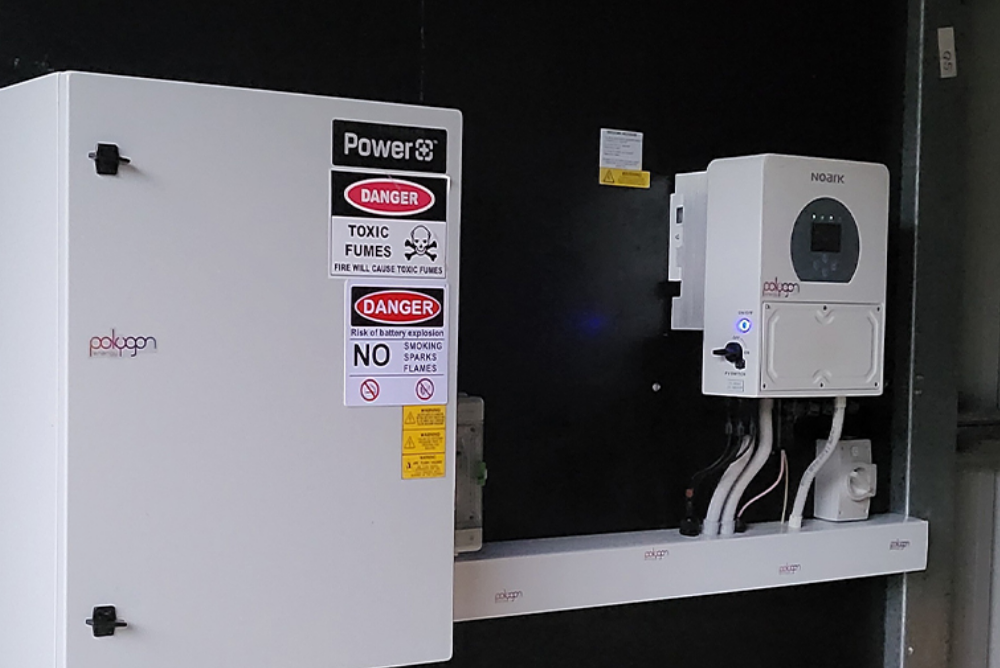
A strong example of this approach can be seen in our residential implementation of comprehensive solar and storage systems designed for continuous power supply.
This case study demonstrates how a well-designed system can deliver uninterrupted residential energy by combining rooftop solar generation with intelligently managed battery storage. The focus is not only on installation but on ensuring continuous optimisation of energy flow throughout the day and night cycle.
The success of such projects is closely tied to the Cheaper Home Batteries Program, which has made these advanced systems more financially accessible to homeowners. Without this policy support, many households would still find integrated storage systems cost-prohibitive.
Additionally, the Battery incentive plays a crucial role in ensuring that system design remains efficient. By encouraging optimal sizing and discouraging unnecessary oversizing, it allows systems like those in our case study to achieve faster payback periods and higher long-term performance.
One of the most important lessons emerging from the Cheaper Home Batteries Program is that system optimisation matters more than system size.
At Polygon Energy, we are seeing a clear shift in customer expectations. Homeowners are increasingly aware that a poorly sized system can reduce efficiency, extend payback periods, and limit long-term savings. This is where the Cheaper Home Batteries Program has had an indirect but powerful educational impact—it has made energy consumers more informed and more engaged in system design decisions.
The Battery incentive reinforces this behaviour by rewarding practical, usage-based system sizing rather than excessive capacity. This ensures that households invest in storage solutions that align with actual energy consumption patterns, not speculative future usage.
As a result, energy systems are becoming more intelligent, more efficient, and more financially viable over their lifecycle.
The broader impact of the Cheaper Home Batteries Program extends beyond individual households. At a system level, it is helping reshape how Australia’s energy grid operates.
With more homes generating and storing their own electricity, the grid is shifting from a centralised model to a distributed energy network. This reduces peak demand pressure and improves overall grid stability, especially during high-consumption periods.
The Cheaper Home Batteries Program has therefore become a key driver of energy decentralisation. Homes are no longer passive consumers—they are active energy participants, storing excess solar during the day and feeding it back into usage cycles when needed.
The Battery incentive supports this transition by encouraging widespread adoption of storage systems that are both efficient and grid-compatible. This ensures that the growth in residential storage strengthens, rather than strains, the overall energy infrastructure.
As the market continues to mature, the structure of the Cheaper Home Batteries Program is also evolving. Recent updates have introduced more targeted rebate structures that prioritise efficient system sizing and long-term sustainability of the scheme.
This evolution reflects a more balanced approach—one that ensures continued adoption while maintaining fiscal and technical sustainability. The Battery incentive is now increasingly focused on encouraging the most efficient use of installed capacity, particularly in the early usable storage range that delivers the highest value to households.
At Polygon Energy, we view this as a positive development. It aligns closely with our design philosophy of right-sized, high-efficiency energy systems that deliver consistent performance over time.
The transformation driven by the Cheaper Home Batteries Program is not just about increased adoption—it is about redefining how energy is produced, stored, and consumed in Australian homes.
Supported by a structured Battery incentive, the program has created a sustainable pathway toward energy independence, reduced electricity costs, and improved grid resilience.
At Polygon Energy, we see this as the beginning of a long-term structural shift. The combination of policy support, technological advancement, and informed consumer behaviour is accelerating the move toward intelligent energy systems that are both financially and environmentally efficient.
As demonstrated in our residential case study, the future of energy is not just about installing solar panels or batteries—it is about integrating them into a seamless, optimised ecosystem that delivers continuous, reliable power for modern living.
The Cheaper Home Batteries Program and the Battery incentive together are not just policy tools—they are the foundation of Australia’s next-generation energy landscape.