
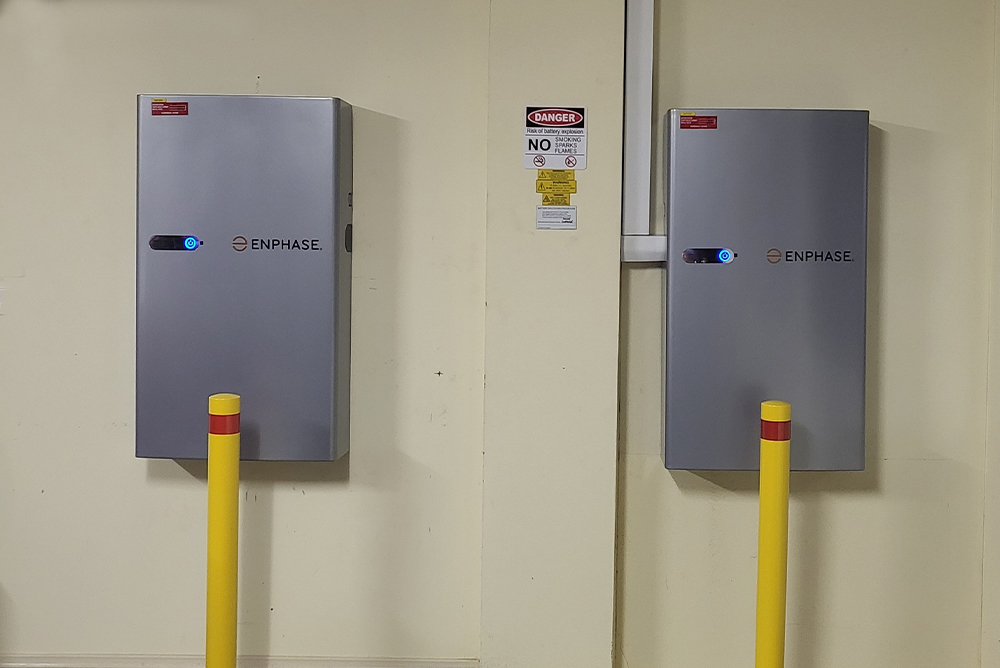
The Cheaper Home Batteries Program is an Australian Government incentive that helps eligible households and small businesses reduce the upfront cost of installing a battery. The program commenced on 1 July 2025 and is delivered through the Small-scale Renewable Energy Scheme (SRES).
For NSW homeowners, an important distinction is that the Cheaper Home Batteries Program is a federal program, not a separate NSW Government battery rebate. Eligible NSW households may also be able to access the NSW Virtual Power Plant (VPP) incentive, subject to its eligibility requirements.
This guide explains how the Cheaper Home Batteries Program NSW works in 2026, how the battery incentive is calculated, which batteries qualify, whether existing solar and off-grid systems are eligible, and how the NSW VPP incentive fits into the picture.
The Cheaper Home Batteries Program is a federal Australian Government incentive available to eligible NSW households and small businesses. It provides support towards eligible battery systems through the SRES and Small-scale Technology Certificates (STCs).
The program is designed to provide approximately a 30% upfront discount, although the actual value depends on the battery’s eligible capacity, applicable STC factor and STC market value.
From 1 May 2026, the STC factor became tiered according to battery capacity, meaning larger batteries do not receive the same incentive per kWh as smaller batteries.
| Question | Answer |
|---|---|
| Is the program available in NSW? | Yes |
| Is it a NSW Government rebate? | No — it is a federal program |
| Program started | 1 July 2025 |
| How is the incentive delivered? | Through SRES/STCs |
| Target discount | Approximately 30% |
| Eligible battery size | 5–100 kWh nominal capacity |
| Maximum usable capacity eligible for STCs | 50 kWh |
| Can existing solar qualify? | Yes |
| Can eligible off-grid systems qualify? | Yes |
| Are grid-connected batteries required to be VPP-capable? | Yes |
| Can NSW VPP incentives potentially be combined with the federal program? | Yes |
The Cheaper Home Batteries Program is an Australian Government program that provides an upfront financial incentive for eligible small-scale battery installations.
The program is delivered through the Small-scale Renewable Energy Scheme (SRES). Instead of homeowners receiving a conventional cash rebate directly from the government, eligible installations can generate Small-scale Technology Certificates (STCs). These certificates have financial value and are generally reflected as an upfront discount on the battery system.
The program applies to eligible batteries installed with:
This means a homeowner does not necessarily need to install solar and a battery at the same time to benefit from the program.
No. The Cheaper Home Batteries Program is a federal Australian Government incentive, not a separate NSW Government battery installation rebate.
This distinction is important because searches for “battery rebate NSW”, “NSW solar battery rebate” and “battery program NSW” can return information about several different programs.
For NSW homeowners in 2026, the key incentives to understand are:
Cheaper Home Batteries Program
A national program delivered through the SRES that provides STC-based support for eligible battery installations.
Virtual Power Plant Incentive
A separate NSW incentive that can support eligible households that connect an eligible battery to a participating VPP.
The NSW VPP incentive can be combined with the Australian Government’s Cheaper Home Batteries Program when the relevant eligibility requirements are met.
There is no single fixed dollar amount for the NSW battery rebate.
The Cheaper Home Batteries Program is designed to provide approximately a 30% upfront discount, but the actual incentive depends on factors including:
The Clean Energy Regulator administers the SRES and determines the applicable STC rules.
Therefore, an advertised statement such as “30% battery rebate” should not be interpreted as a guaranteed 30% cash payment on every battery installation.
The basic process is:
Eligible battery → eligible installation → STCs created → STC value applied as an upfront discount
The number of STCs depends on the battery’s eligible usable capacity and the applicable STC factor.
The financial value of those STCs can then be passed through to the customer as a discount on the installed battery system.
This is why two customers installing batteries of different sizes may receive different incentive amounts.
From 1 May 2026, the STC factor became tiered according to battery capacity.
The first portion of usable battery capacity receives the highest applicable factor, while progressively larger portions receive lower factors.
For installations from 1 May 2026, the structure is:
| Usable battery capacity | STC factor |
|---|---|
| First 14 kWh | 100% |
| >14–28 kWh | 60% |
| >28–50 kWh | 15% |
| Above 50 kWh | No additional STCs |
This means that a larger battery does not automatically receive proportionally more government support.
The change makes battery sizing particularly important for homeowners considering a solar battery NSW installation.
Eligible batteries generally need to have a nominal capacity between 5 kWh and 100 kWh.
However, the program uses usable battery capacity when determining the STC entitlement, and STCs can apply to a maximum of 50 kWh of usable capacity.
Nominal capacity is the battery’s stated total storage capacity.
Usable capacity is the amount of stored energy available for actual use.
These figures are not necessarily the same.
For this reason, homeowners should ask installers for both figures when comparing battery systems.
Yes. Eligible batteries can be installed with an existing solar PV system.
A homeowner who already has rooftop solar can therefore potentially add a battery and access the Cheaper Home Batteries Program, provided the complete system meets the applicable requirements.
However, existing solar systems should be assessed before selecting a battery.
Factors such as:
can affect the final system design.
Yes. Eligible off-grid battery systems can qualify for the Cheaper Home Batteries Program.
This is particularly relevant for homeowners searching for off-grid solar NSW, off-grid solar systems NSW and standalone off-grid solar systems.
However, off-grid systems have specific eligibility requirements.
For example, the battery must generally be installed at a lived-in dwelling. An isolated battery installed solely for a shed, bore pump or other non-residential application does not automatically qualify.
There are also specific requirements relating to the property’s distance from the electricity grid and VPP capability.
Therefore:
Being off-grid does not automatically exclude a property from the battery incentive.
The specific system and property need to be assessed against the program rules.
Grid-connected battery systems must meet the program’s VPP capability requirements.
A Virtual Power Plant allows multiple distributed batteries to be coordinated as an energy resource.
Importantly, being VPP-capable is not necessarily the same as being required to immediately participate in a VPP program.
Specific requirements and exemptions apply to eligible off-grid systems.
For NSW customers, VPP participation can also be relevant because an eligible household may be able to access the separate NSW VPP incentive.
The NSW Virtual Power Plant incentive is a separate NSW Government incentive that supports eligible households connecting batteries to participating VPPs.
A VPP links multiple batteries through digital control systems so that they can operate collectively as a larger energy resource.
The NSW incentive is separate from the federal Cheaper Home Batteries Program, but eligible households can potentially benefit from both.
The amount available under the NSW VPP incentive can depend on factors such as:
Yes, eligible NSW households may be able to combine the two incentives.
The important distinction is:
Cheaper Home Batteries Program → STC-based upfront battery discount.
VPP incentive → support for eligible VPP participation.
They are not two versions of the same battery rebate. They are separate programs with separate eligibility rules.
Eligible households and small businesses can access the program when their battery installation satisfies the applicable requirements.
Key requirements include:
The battery must also meet the relevant Clean Energy Council product requirements and the installation must comply with applicable electrical and safety requirements.
Yes. The battery must be an eligible product listed through the applicable Clean Energy Council approval arrangements.
This is one reason homeowners should check the actual battery model, rather than assuming that every product sold by an installer automatically qualifies.
Product eligibility and installation requirements should be verified before signing a contract.
Yes. Battery installations claiming the incentive must meet the applicable installer accreditation requirements.
The Clean Energy Regulator specifies requirements involving Solar Accreditation Australia (SAA) accreditation and the relevant battery installation endorsement.
This is important because a battery rebate should never be considered separately from the quality and compliance of the installation.
Generally, no. The program limits STC claims for battery systems at a premises, subject to specific rules and exceptions.
This means homeowners should think carefully about their future energy requirements before installing a battery.
Installing a smaller battery today and assuming another fully incentivised battery can simply be added later may not be correct.
The Clean Energy Regulator provides specific rules governing additional battery installations and expansions.
Not proportionally.
This is one of the most important changes homeowners need to understand in 2026.
From 1 May 2026:
Therefore, a 30 kWh battery does not receive the same incentive per kWh as a 10 kWh battery.
The right battery size should be based on your electricity consumption and solar generation, rather than simply maximising the available incentive.
A proper battery assessment should consider:
For example, a household planning to add an EV and electrify hot water may have a very different future energy profile from a home with relatively low evening consumption.
This is why battery sizing should be treated as an energy-design decision, not simply a rebate decision.
Yes. Eligible small businesses can access the program for qualifying battery systems.
However, business battery systems should be assessed against the site’s actual electricity demand.
Important considerations can include:
For a business, the financially optimal battery may therefore be very different from the optimal battery for a residential property.
The program provides an incentive towards an eligible battery system; it does not mean the government pays the entire installation cost.
The final installed price may include:
This is why consumers should compare the final installed price after the applicable incentive, rather than comparing advertised rebate amounts alone.
Before signing a battery installation contract, ask:
These questions can help NSW homeowners compare quality solar systems NSW and battery installations on a like-for-like basis.
| Myth | Fact |
|---|---|
| The battery rebate is a NSW Government program | The Cheaper Home Batteries Program is federal |
| Everyone gets exactly 30% off | The actual incentive varies |
| It only applies to new solar | Eligible batteries can be added to existing solar |
| Off-grid batteries are excluded | Eligible off-grid systems can qualify |
| Bigger battery = proportionally bigger rebate | STC support tapers with capacity |
| VPP capability means I must immediately join a VPP | Capability and participation are different concepts |
| The rebate is paid directly into my bank account | The incentive is generally reflected through STCs and an upfront discount |
| Every battery product qualifies | The battery must meet applicable product requirements |
| The largest battery is automatically the best choice | Battery sizing should reflect actual and future energy needs |
Yes. The Australian Government’s Cheaper Home Batteries Program remains available for eligible battery installations under the SRES.
There is no single fixed rebate amount. The incentive depends on eligible battery capacity, the applicable STC factor and the value of STCs.
NSW residents can access the federal Cheaper Home Batteries Program if eligible. NSW also has a separate VPP incentive for eligible households.
The Cheaper Home Batteries Program is federal.
Yes. Eligible batteries can be added to existing solar PV systems.
Yes, potentially. Eligible off-grid battery systems can qualify subject to specific requirements.
5 kWh nominal capacity is generally the minimum eligible battery size.
Eligible batteries can generally have up to 100 kWh nominal capacity, but STCs only apply to the first 50 kWh of usable capacity.
No. From 1 May 2026, the STC factor tapers across different battery-capacity bands.
Grid-connected systems must meet VPP capability requirements, but technical capability is distinct from immediate VPP participation.
Yes, where the relevant eligibility requirements are satisfied.
Yes. The battery must meet the applicable product eligibility requirements.
Yes. The installation must meet the applicable SAA accreditation and battery endorsement requirements.
Generally, no, although specific rules and exceptions apply to additional battery installations.
No. Battery capacity, usable energy, warranty, compatibility, backup capability, VPP functionality and system design should all be considered.
The biggest point of confusion is simple:
The Cheaper Home Batteries Program is a federal battery incentive, not a separate NSW battery rebate.
For NSW homeowners, the current landscape can be understood as:
→ Federal
→ SRES/STCs
→ Upfront battery discount
→ NSW-specific
→ VPP participation
→ Potential additional incentive
From 1 May 2026, battery capacity also matters more because the STC factor tapers above 14 kWh and 28 kWh, with STCs capped at the first 50 kWh of usable capacity.
That makes it increasingly important to select a battery based on how your home uses energy, rather than simply choosing the largest battery available.
Choosing a battery should begin with understanding your energy consumption, solar generation and future electricity requirements.
Polygon Energy can help NSW homeowners assess their solar and battery requirements, compare suitable system configurations and understand how available incentives may apply to their installation.
Whether you’re considering solar battery NSW, solar and battery installation, off-grid solar systems NSW, or broader home electrification in NSW, the focus should be on designing a system around your actual energy profile.
Talk to Polygon Energy to understand your battery options and design an energy system built around your home.