
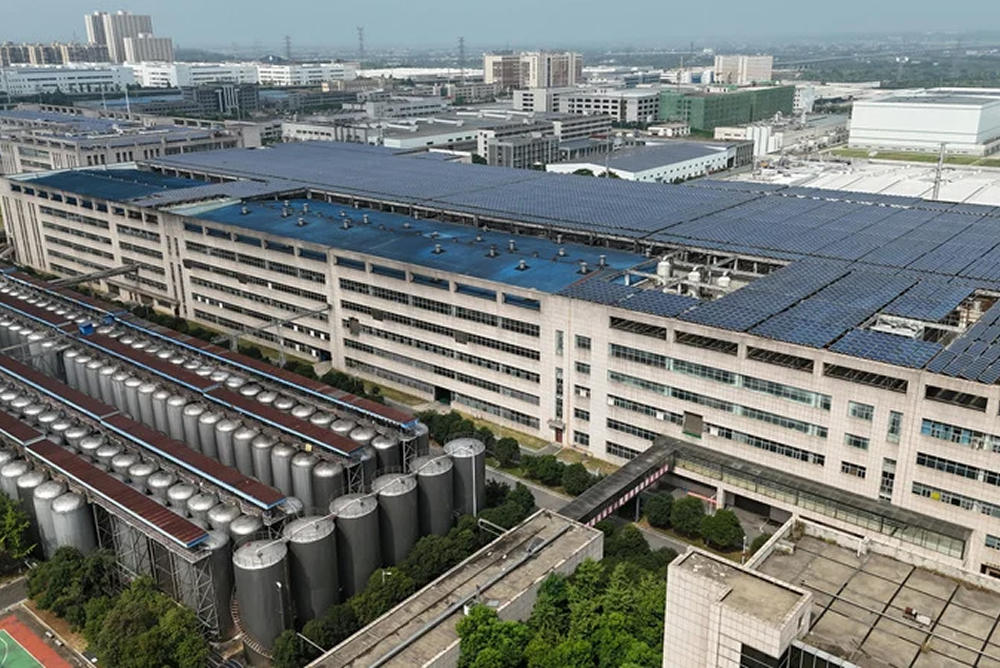
Australia’s commercial solar market is entering an important new phase.
From 1 October 2026, the eligibility threshold for the Small-scale Renewable Energy Scheme (SRES) is set to increase from 100 kW to 1 MW. For businesses, this is more than a change in system size. It creates an opportunity to design solar systems around actual energy requirements rather than around an incentive threshold.
For warehouses, manufacturing facilities, agricultural businesses, schools, retail centres and other commercial sites, larger rooftop solar systems can now become a more financially viable part of a long-term energy strategy.
At Polygon Energy, we see this as an important step towards helping Australian businesses make better use of their available energy infrastructure.
Historically, the 100 kW SRES threshold could influence how commercial solar projects were designed. Businesses with larger energy loads often had to weigh the benefits of installing a smaller system against the advantages of generating more of their own electricity.
The expansion to 1 MW changes that equation.
Eligible systems up to 1 MW can access Small-scale Technology Certificates (STCs), subject to the scheme’s eligibility requirements. These certificates can be assigned to an accredited installer and generally applied as an upfront discount on the project cost.
This means businesses can consider larger solar installations while still accessing federal financial support.
Rather than asking, “How much solar can we install while staying under the old threshold?”, businesses can start asking a more useful question:
“How much solar does this site actually need?”
That shift is significant.
Many commercial properties have large roof areas that remain largely unused from an energy perspective.
A warehouse may have hundreds or thousands of square metres of roof space. A manufacturing facility may operate energy-intensive equipment throughout the day. An agricultural business may have substantial daytime electricity requirements. A school or shopping centre may have a consistent daytime load.
Larger solar systems allow these businesses to better match their generation capacity with their electricity consumption.
For example, a business considering a 250 kW, 500 kW or even 1 MW system could potentially use a greater proportion of its available roof space to generate electricity on-site.
The benefit isn’t simply the number of panels installed. It is the relationship between generation, consumption, system design, grid connection and long-term energy costs.
That is where engineering-led solar planning becomes important.
The value of STCs varies according to factors including system capacity, location, installation date and the applicable STC market conditions. Therefore, businesses should treat any upfront discount as a project-specific estimate rather than a fixed percentage.
Illustratively, larger commercial systems may look like this:
| System Capacity | Indicative Pre-Rebate Cost | Potential Upfront STC Benefit* | Indicative Net Investment* |
|---|---|---|---|
| 100 kW | ~$130,000 | ~$27,000 | ~$103,000 |
| 250 kW | ~$300,000 | ~$68,000–$70,000 | ~$230,000–$240,000 |
| 500 kW | ~$550,000 | ~$110,000–$136,000 | ~$414,000–$440,000 |
| 1 MW | ~$1.1 million+ | Potentially ~$230,000–$250,000 | ~$850,000+ |
*Illustrative figures only. Actual project costs, STC values and savings depend on system specifications, location, installation timing, market conditions and eligibility.
The important point is not the exact dollar value.
It is that the expanded threshold can make it easier for businesses to consider a system that is appropriately sized for their energy profile without automatically losing access to the SRES mechanism.
Looking for top solar panels in NSW? Choose Polygon Energy for smart solar solutions built around your energy needs
A larger solar system is not automatically a better solar system.
For a commercial property, the right system needs to consider:
A 500 kW system may make sense for one business, while a 250 kW system paired with battery storage could be more appropriate for another.
This is why commercial solar should be approached as an energy infrastructure project, rather than simply a panel installation.
For businesses with significant evening demand or demand charges, solar generation is only one part of the equation.
Battery storage can help capture excess solar generation during the day and make that energy available when it is more valuable.
This can potentially support strategies such as:
The most effective solution depends on the site’s load profile and commercial objectives.
For some businesses, the priority may be maximising solar self-consumption. For others, battery storage and intelligent energy management may provide a stronger long-term business case.
Power your home or business with Polygon Energy and top solar panels in Canberra, selected for quality and performance.
The expansion of the SRES threshold is also occurring alongside broader efforts to improve the connection process for distributed energy resources.
For commercial projects, grid connection can be a critical part of project planning. Network capacity, export constraints, protection requirements and technical standards can all influence how a system is designed and when it can be commissioned.
A larger incentive alone cannot solve these challenges.
Businesses need an experienced project partner that can assess the site, understand the electrical requirements and coordinate the technical aspects of the project from design through to commissioning.
The SRES expansion should also be considered alongside other financial and operational levers available to businesses.
Depending on the state, business type and project structure, commercial solar and battery projects may potentially benefit from a combination of:
The right combination can materially influence a project’s payback period and overall return on investment.
However, incentives should support the business case—not define it.
A well-designed commercial solar project should remain focused on how the system performs over its operational life.
Businesses considering a larger solar installation should not wait until the policy change takes effect to begin planning.
A commercial solar project can involve engineering assessments, structural considerations, network approvals, procurement and installation. Starting early gives businesses more time to understand their options.
A sensible starting point is an energy assessment covering:
The expansion of the SRES threshold to 1 MW represents a meaningful opportunity for Australia’s commercial energy sector.
But the real opportunity is not simply installing bigger solar systems.
It is giving businesses greater freedom to design energy systems around their actual operational needs.
At Polygon Energy, our approach is to look beyond the panel count and understand the complete energy picture—from generation and storage to electrical infrastructure, monitoring and long-term system performance.
For businesses with significant energy consumption, this policy change is a good reason to revisit the roof, the electricity bill and the energy strategy together.
The question is no longer simply whether your business can install solar. It is how intelligently you can design your energy system for the years ahead.
Businesses can now consider larger commercial solar systems while potentially accessing upfront SRES incentives.
Eligible businesses could significantly reduce upfront solar costs, with the actual STC benefit depending on system size, location and installation date.
Not necessarily. Starting early allows time for energy assessments, system design, approvals and project planning before the new threshold takes effect.
No. The right system size depends on your electricity consumption, roof space, network capacity and future energy requirements.
Polygon Energy assesses your energy usage, site infrastructure and future requirements to design a commercial solar solution that delivers long-term value—not simply the largest possible system.
Choose Polygon Energy for a quality solar system in Canberra designed for reliable performance and long-term energy savings.