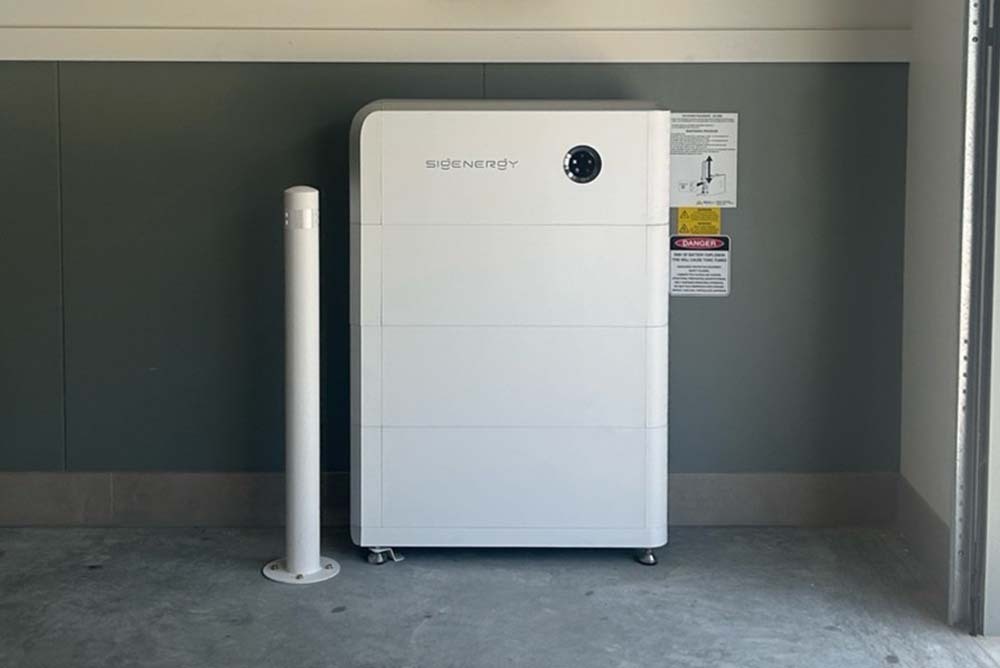
Short answer: No. Install before 1 January 2027. The Cheaper Home Batteries Program rebate drops on that date, so waiting cuts your battery rebate NSW discount by roughly $400 to $600 on a typical home battery. If you’ve been searching for the NSW solar battery rebate and wondering whether to hold off until the new year, this guide gives you the dates, the numbers and a simple plan.
Key facts
- Deadline: the battery must be installed, with a certificate of compliance, before the January 2027 reduction.
- Current rate: 6.8 STCs per kWh, about $252 per kWh, from May to December 2026.
- After 1 January 2027: 5.7 STCs (about $211 per kWh), then 5.2 from July 2027 (about $192 per kWh).
- Eligibility: no means testing, open to all Australians.
- End date: the scheme runs to 2030, with reductions every six months until then.
What is the Cheaper Home Batteries Program?
The Cheaper Home Batteries Program is the federal government’s $7.2 billion scheme to make home batteries more affordable. It launched on 1 July 2025 and works through the small-scale technology certificate (STC) system that has long supported rooftop solar. The discount is applied upfront off the battery price, so most households see a lower quote rather than a payment after installation.
Because the scheme is federal, it is the same battery program NSW households use as everyone else in Australia. There is no separate state application, and your installer handles the paperwork. What changes from state to state is the extra help that sits on top, covered below.
When does the NSW solar battery rebate drop?
The NSW solar battery rebate is the federal rebate, and the next drop lands on 1 January 2027. The battery rebate steps down twice a year, on 1 January and 1 July. The 1 May 2026 cut was a one-off mid-year adjustment, and the current rate holds until 1 January 2027. The schedule looks like this:
- Now to 31 December 2026: 6.8 STCs per kWh, about $252 per kWh
- 1 January to 30 June 2027: 5.7 STCs, about $211 per kWh
- 1 July to 31 December 2027: 5.2 STCs, about $192 per kWh
These dollar values assume an STC price of $37.
How much will I lose by waiting?
Roughly $400 to $600 on a typical home battery. These are my estimates for batteries of 14 kWh or smaller, at an STC price of $37:
| Battery size | Rebate now (to 31 Dec 2026) | Rebate Jan–Jun 2027 | Difference |
|---|
| 10 kWh | ~$2,520 | ~$2,110 | ~$410 less |
| 14 kWh | ~$3,530 | ~$2,950 | ~$580 less |
Your quote may differ, because installers often pass on less than the full STC value to cover administration costs. For a household comparing the battery rebate NSW offers today with the same purchase in February, the gap is real money. It isn’t so large that it justifies a rushed or oversized purchase, though. A slightly lower rebate on the right system beats a full rebate on the wrong one.
Does battery size change the rebate?
Yes. The first 14 kWh of usable capacity gets 100% of the rebate, 14 to 28 kWh gets 60%, and 28 to 50 kWh gets 15%. The first 14 kWh gets the full benefit, and every kWh above that gets less. A very large solar battery NSW system can therefore cost far more without lifting the rebate by much.
Most households are better served by sizing the battery to their evening usage and solar output than by buying the biggest unit the tiers allow. Ask your installer to show your average use after sunset, because that is the amount the battery needs to cover.
Who qualifies for the battery program in NSW?
Most households with a suitable home can qualify for the battery program NSW residents use, because the rules are federal:
- There is no means of testing, so the program is open to all Australians.
- On-grid batteries must be able to participate in a virtual power plant (VPP).
- EV batteries are not covered.
- Multiple stackable modular batteries count as one battery unit.
- Your battery should appear on the Clean Energy Council’s approved list.
Is there any other battery incentive in NSW?
Yes. A battery incentive can be stacked on top of the federal discount. The NSW Home Energy Saver zero-interest loan of up to $15,000 for solar, batteries and other upgrades can be combined with the federal rebate, as can VPP incentives.
Each battery incentive has its own eligibility rules, funding limits and end dates, so confirm the current terms before you sign. A loan won’t lower the price of the battery, but it can ease the upfront cost, which matters when you’re trying to commit before year’s end.
Can off grid solar systems get the rebate?
Probably not. The rebate is built around grid-connected batteries, since on-grid batteries must be able to participate in a virtual power plant. A standalone off grid solar system has no grid connection, so it can’t join a VPP and may not qualify.
If you’re planning off grid solar on a rural block, or looking at an off grid solar system NSW property where a grid connection is expensive, get eligibility confirmed in writing before the rebate becomes part of your budget. I couldn’t find clear published guidance covering every off-grid scenario, so treat this as a question for your installer rather than an assumption.
How do off grid and grid-connected systems differ?
A grid-connected home uses the grid as a backstop. The battery stores surplus solar, and when it runs low, the house draws from the grid. A standalone off grid solar system has no such backstop, so it must be sized for the worst days of the year. That usually means a larger battery and often a backup generator, which makes it a different purchase from a typical home battery, with different costs and rules.
Anyone pricing off grid solar should compare the cost of a grid connection against the cost of oversizing storage. Anyone researching an off grid solar system NSW project should also ask the installer, the network operator and the local council about requirements. The rebate may be only a small part of that calculation.
What should I do before the deadline?
- Get two or three solar battery NSW quotes this month.
- Ask each installer to state the rebate amount in writing, and how much of the STC value they pass on.
- Confirm the installation date falls before 1 January 2027, not just the contract date.
- Check the battery is on the approved list and can join a VPP.
- Size the battery to your evening usage, not to the largest rebate tier.
Installers are busy. More than 260,000 households, businesses and organisations installed batteries in the first ten months, so waitlists can stretch into December.
What happens if I miss the deadline?
You can still claim a rebate, but a smaller one. The reductions continue every six months until the program ends in 2030. By July 2027, my estimates put the loss at about $600 for a 10 kWh battery and about $830 for a 14 kWh battery, compared with installing now. Waiting a full year costs more again, so if you’ve decided to buy, sooner is cheaper.
Common mistakes to avoid
- Assuming a signed contract locks in the rate. Installation with a compliance certificate must be complete.
- Oversizing to chase the rebate. Larger tiers pay much less per kWh.
- Skipping the VPP check. A battery that can’t join a VPP may not qualify.
- Ignoring the installer’s pass-through. Two quotes with the same headline rebate can differ in what you actually save.
- Leaving it until December. Waitlists and holidays can push installation past the cut-off.
FAQ
Is the Cheaper Home Batteries Program ending?
Not yet. It runs to 2030, but the rebate falls every six months.Is there a separate NSW solar battery rebate?
The main rebate is federal. NSW adds extras such as the Home Energy Saver loan.How much is the battery rebate NSW households get on a 10 kWh battery?
About $2,520 now, falling to about $2,110 from 1 January 2027, based on my estimates at an STC price of $37.Who can use the battery program NSW offers?
Any household can, with no means test, provided the battery is eligible and can join a VPP.Which battery incentive can I combine with the federal rebate?
The NSW Home Energy Saver loan and VPP incentives can both be stacked. Check current terms first.Can off grid solar qualify for a rebate?
Generally not, because eligible batteries must be able to connect to the grid and join a VPP.Is an off grid solar system NSW buyers install eligible?
It depends on the setup. Get written confirmation from your installer before you rely on it.Is a standalone off grid solar system eligible?
Likely not, since it has no grid connection. Confirm before purchase.Is a solar battery NSW installation worth doing before January?
For most households who already plan to buy, yes, because the rebate is larger until 31 December 2026.