
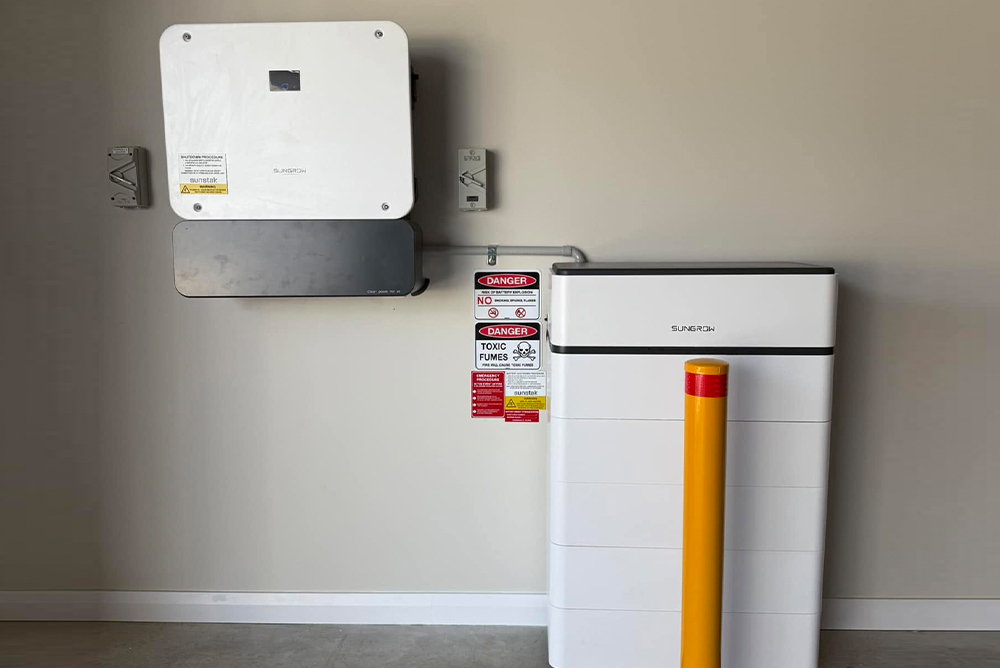
Australia’s home battery market is moving faster than ever—and for homeowners in Canberra and NSW, 2026 could be a defining year for making the switch to energy storage.
Since its launch in July 2025, the federal Cheaper Home Batteries Program has transformed the economics of residential battery storage. In just six months, the program had supported more than 160,000 battery installations across Australia, adding more than 3.6 GWh of battery capacity to the energy system. The Australian Government has since expanded the program’s estimated funding from $2.3 billion to $7.2 billion over four years, with an expectation that more than two million Australians could install batteries by 2030.
But there is an important catch: the rebate structure has changed from 1 May 2026.
For homeowners considering a battery today, understanding the current Battery rebate NSW, the NSW solar battery rebate landscape and the broader Battery program NSW opportunities is no longer optional. The size of the battery, installation date, system eligibility and how the battery is designed can all influence the financial outcome.
And this is exactly where expert advice matters.
The federal Cheaper Home Batteries Program was introduced on 1 July 2025 to make eligible small-scale battery systems more affordable for Australian households and businesses.
Rather than operating as a conventional cash rebate paid directly to homeowners, the program works through the expansion of the Small-scale Renewable Energy Scheme (SRES). Eligible battery installations can generate Small-scale Technology Certificates (STCs), with the financial benefit generally passed on to customers as an upfront discount by an eligible retailer or installer. The government describes the incentive as providing around a 30% discount on eligible battery systems.
The impact has been immediate.
More than 160,000 battery installations were supported in the first six months of the program, demonstrating the scale of Australia’s appetite for household energy storage. The expanded funding is expected to support more than two million additional battery installations by 2030 and deliver around 40 GWh of additional storage capacity. For homeowners, this means batteries are rapidly moving from a premium upgrade to a mainstream component of the modern solar home.
The biggest misconception about the current Battery rebate NSW market is that homeowners can simply select a large battery and expect the same level of financial support per kilowatt-hour.
That is no longer how the program works.
From 1 May 2026, the STC incentive became progressively tiered according to usable battery capacity:
The change is designed to encourage homeowners to install appropriately sized batteries rather than simply maximising battery capacity.
That makes professional system design more important than ever.
This is where homeowners need to distinguish between different government programs.
The federal NSW solar battery rebate conversation is primarily linked to the national Cheaper Home Batteries Program, which is available across Australia to eligible systems—not a separate NSW-only version of the federal program.
At the same time, NSW households may have access to other state-based energy programs, depending on eligibility, location, household circumstances and the type of upgrade being considered.
For example, the NSW Government’s Home Energy Saver Program has introduced support for eligible households through zero-interest loans of up to $15,000 for solar, batteries and other home energy improvements, alongside discounts of up to $4,000 for eligible families.
The result is that a homeowner in NSW could potentially be looking at multiple layers of energy support, rather than a single rebate.
This makes professional guidance particularly valuable. A reputable energy partner should help homeowners understand which incentives actually apply to their situation rather than presenting every available program as universally available.
The broader Battery program NSW opportunity is about more than reducing the purchase price of a battery.
A battery fundamentally changes how a home interacts with its solar system.
During the day, rooftop solar can generate more electricity than the household needs. Without storage, that surplus may be exported to the grid. With a correctly sized battery, surplus generation can be stored and used later, including during evening periods when solar production has fallen.
This can increase solar self-consumption and potentially reduce the amount of electricity a household needs to purchase from the grid.
But the financial outcome depends on how the system is designed and operated.
A battery that is too small may not capture enough surplus solar. A battery that is unnecessarily large may increase upfront costs without providing proportionate benefits.
This is why the right question isn’t:
It is:
At Polygon Energy, battery design begins with the household’s energy profile—not with a product catalogue.
Polygon brings more than 20 years of engineering experience across residential, commercial and off-grid energy systems. The company is an SAA-accredited designer of grid-connected solar and battery systems as well as standalone systems, and is a NETCC Approved Seller. (polygon energy)
This engineering capability becomes particularly important under the current Cheaper Home Batteries Program, because the incentive structure rewards appropriately sized systems rather than simply encouraging maximum capacity.
Polygon’s residential approach is built around actual electricity consumption. Its current guidance indicates that around 80% of homes can be well served by a 15 kWh battery, while higher-consumption properties may need larger systems. (polygon energy)
That doesn’t mean every household should have a 15 kWh battery.
It means the battery should be engineered around the household’s actual requirements.
Factors such as existing solar capacity, daily consumption, evening loads, tariff structure, backup requirements and future electrification plans all need to be considered.
For homeowners, the biggest challenge is often not finding information. It is knowing which information applies to them.
Polygon Energy supports homeowners across Canberra and NSW through this process—from understanding available incentives and assessing existing solar systems to designing battery configurations and coordinating compliant installation.
For Canberra homeowners, this expertise is particularly relevant as the ACT continues to develop its broader home electrification ecosystem.
For NSW households, the combination of federal battery support and state energy initiatives makes careful assessment equally important.
Polygon’s NSW electrical contractor licence and ACT electrical contractor licence, alongside its engineering and energy-system capabilities, allow the company to support customers across both markets. (polygon energy)
The objective is not simply to help a customer claim a Battery rebate NSW incentive.
It is to ensure the battery remains technically appropriate and financially meaningful long after the incentive has been applied.
Rapid market growth also creates a greater responsibility for installers.
The Clean Energy Regulator has been increasing inspections of battery installations, with 1,000 inspections completed by February 2026. Additional requirements around photographic evidence and critical labelling were also introduced as part of stronger compliance measures. (Clean Energy Regulator)
This is an important reminder that a battery is not simply another appliance.
It is a high-energy electrical system that must be correctly designed, installed, configured and maintained.
For homeowners considering the NSW solar battery rebate, choosing an installer based purely on the lowest advertised price can therefore be a false economy.
Accreditation, engineering capability, electrical compliance, product selection, commissioning and after-sales support all matter.
The next phase of Australia’s energy transition will not simply be about installing more solar panels.
It will be about connecting generation, storage, monitoring, smart loads, electric vehicles and the grid into one intelligent energy system.
Home batteries are already becoming an important part of that transition. The federal government expects the expanded program to contribute around 40 GWh of additional storage capacity by 2030. (Energy.gov.au)
This distributed storage capacity can help households make better use of renewable energy while also contributing to a more flexible electricity system.
For homeowners, the benefit is personal: more control over when and how energy is used.
For the grid, the opportunity is systemic: thousands of distributed batteries can collectively become a significant energy resource.
The Cheaper Home Batteries Program has made battery storage more accessible. But the rebate should be considered a financial input—not the reason to choose a particular system.
The same applies to the Battery rebate NSW, NSW solar battery rebate and wider Battery program NSW opportunities.
The best battery is not necessarily the biggest battery or the one with the largest advertised discount.
It is the system that matches your home’s energy consumption, solar generation, future electricity needs and financial objectives.
That is where Polygon Energy’s engineering-led approach makes a difference.
With experience across Canberra and NSW, accredited design capabilities, residential and commercial expertise, and a focus on intelligent energy systems, Polygon helps homeowners move beyond simply buying a battery towards building a better-performing energy system.
Because the real opportunity created by Australia’s battery incentives isn’t just a cheaper battery.
It’s the chance to make your home smarter, more energy independent and better prepared for the future.